

Understanding the XHMaster Formula MT4 Indicator
📊 Discover how the XHMaster Formula MT4 indicator helps forex traders analyze markets, improve strategy, and make smarter trades with practical tips.
Edited By
Oliver Shaw
Boom and Crash indices are popular in Pakistan’s trading community because they simulate market behaviour with sudden, sharp price spikes. These indices jump or crash by predefined points, which traders can use to profit from quick price shifts, but this volatility also poses risks. That’s where a Boom and Crash spike detector becomes essential.
A spike detector is a tool designed to identify these sudden price jumps immediately as they happen. By analysing market data in real-time, the detector flags unusual, rapid movements in price, often caused by high-volume trades or algorithmic bursts. This helps traders anticipate potential reversals or continuation moves, allowing them to adjust their positions fast, rather than getting caught off guard.

Spike detection is not just about watching prices jump; it’s about understanding the triggers behind these moves and preparing your trading strategy accordingly.
In practical terms, a spike detector monitors price bars or candles to spot outliers that differ significantly from recent price action. For example, if the Boom index suddenly jumps 20 points within a few seconds in a usually steady market, the detector alerts the trader. This early signal can help in placing stop-loss orders tighter or taking profits earlier, thereby managing risk better.
For traders in Pakistan, where market conditions can be volatile due to global and local factors, these spike detection tools offer a clearer picture. Whether trading with brokers like IG Markets or using platforms that provide Boom and Crash indices, incorporating spike detection enhances decision-making.
In the sections ahead, we’ll explore the technical workings of these detectors, their impact on trading decisions, and tips on how to use them effectively. Understanding spike detectors fully can save you from sudden losses and improve your edge in the fast-moving trading environment.
Boom and Crash indices occupy a unique place in online trading, offering chances to capitalise on sudden market movements that aren’t typical in traditional stock or forex markets. These indices simulate economic cycles by creating rapid upward (Boom) or downward (Crash) price spikes at irregular intervals, often making them appealing for traders seeking short-term profits in volatile conditions. Understanding their mechanics is essential for using tools like spike detectors effectively.
Bustling with sharp fluctuations, Boom and Crash indices mirror extreme price changes by design. For instance, a Boom index will abruptly spike upwards by a large percentage—say 30 to 40 points—within seconds, reflecting a simulated buying frenzy. Conversely, Crash indices show sudden steep drops. This automated behaviour generates volatility that traders can tap into, but it also means price moves don’t always reflect economic fundamentals.
This dynamic makes their patterns different from usual market movements. Unlike stable trends in equity markets, Boom and Crash indices show irregular volatility spikes mixed with periods of low movement. That quality requires careful timing and attention to price actions.
Unlike stocks or forex pairs, Boom and Crash indices don’t represent real companies or currencies. Their prices aren’t influenced directly by earnings reports or geopolitical news. Instead, their shifts are driven by programmed algorithms producing artificial spikes. This abstraction allows traders to focus on price action strategies and technical analysis rather than fundamental data.
Moreover, these indices often trade 24/7 with fewer restrictions, unlike stock markets that have fixed hours or forex pairs which can be susceptible to wider economic dependencies. For example, Boom 1000 index might spike several times in one trading session, which would be rare in standard equity markets.
Traders are attracted to Boom and Crash markets for their high volatility and clear spike patterns that can fast-track profits. By identifying the start of a Boom spike, a trader might enter a long position early and ride the sharp uptrend for quick gains. Similarly, spotting a Crash spike could signal chances to short sell or exit a long trade promptly.
Many retail traders find these indices easier to predict using technical tools because the spikes follow consistent thresholds. For example, a trader using a spike detector might anticipate a Crash index’s dip of 50 points before buying back at a lower price. This repeated cycle creates several profit chances daily.
That said, these markets come with distinct risks. The sudden price spikes can also catch traders unprepared, leading to swift losses. For example, a trader holding a long position during an unexpected Crash spike might see their account balance drop sharply within moments.
Additionally, because these indices are largely synthetic, external factors like platform latency or data feed errors can cause missed signals or false positives. Traders must also manage leverage carefully; high leverage magnifies both gains and losses dramatically during these spikes.
Mastering Boom and Crash indices requires understanding their artificial volatility and unique behaviour compared to traditional markets. Equipped with this knowledge, traders can use spike detection tools more effectively to manage risks and identify promising setups.
Price spikes in Boom and Crash markets represent sudden, sharp movements in price within a short time. Understanding these spikes is essential for traders because they can create both significant risks and opportunities. By recognising these rapid price jumps, traders can better time their market entries and exits, helping protect profits or reduce losses during volatile periods. For example, in a Boom 100 index, a sudden price surge might reflect a short-term imbalance between demand and supply, signaling a chance for quick gains if spotted early.
Volatility is the backbone of price spikes in these indices. When markets experience increased uncertainty—be it due to economic news, geopolitical events, or shifts in investor sentiment—price movements tend to become exaggerated. For instance, during a global event that affects investor confidence, such as a sudden interest rate announcement from the State Bank of Pakistan, the Boom and Crash markets often react with sharp price swings. This heightening volatility can produce distinct spikes rather than steady price changes.
Highly leveraged trading in Boom and Crash indices can amplify such effects, with small market shifts triggering outsized price movements. Traders who ignore volatility cues risk getting caught in unexpected spikes that can wipe out capital swiftly.
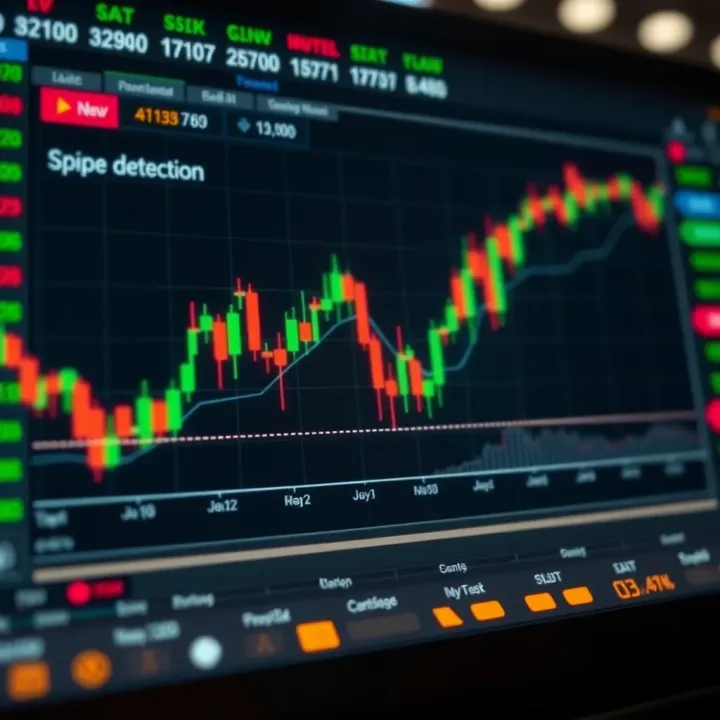
Price spikes also occur when a large number of traders buy or sell aggressively within a short window. Imagine a scenario where unexpected positive news about a tech company causes a flood of buy orders in the Crash 500 index. This sudden pressure pushes prices sharply upward before normalising. Conversely, a sudden rush to sell—triggered by a negative report or geopolitical tension—can cause a sharp downward spike.
Understanding how these bursts of buying or selling pressure cause price spikes helps traders anticipate market behaviour during news releases or other fast-moving events. It also explains why volume indicators often spike alongside these price moves.
Clear spike signals differ from usual price movements by their abruptness and magnitude. Unlike gradual trends, spikes appear as rapid price jumps within one or two candles on a price chart. For example, a sudden 2-3% climb followed by quick retracement can mark a spike rather than standard bullish momentum.
Traders often watch for candles with long wicks or sudden volume surges, as these usually signify spike activity. Detecting these signs early can provide an edge for entering or exiting trades before the market stabilises.
Regular price moves tend to be steady and more predictable, forming trends or patterns over time. Spikes are sharp deviations that break from these trends, often caused by external shocks or intense market activity.
For example, a Boom index slowly rising over several hours reflects a regular price move. A spike, however, might be a sharp jump within minutes that reverses just as quickly. Recognising the difference prevents traders from mistaking spikes for genuine trend shifts, helping avoid false signals and costly mistakes.
Understanding these dynamics allows traders to adjust strategies, either by capitalising on spikes or protecting against sudden market jolts.
By learning what drives price spikes and how to spot them, traders working with Boom and Crash indices can better navigate volatility and improve decision-making under uncertain conditions.
Understanding how a spike detector functions is key for traders who want to navigate the unpredictable swings of boom and crash indices effectively. These detectors are designed to spot rapid price movements—spikes—that happen due to sudden market actions. By identifying such moments, traders can better time their entries and exits, minimising potential losses.
Spike detectors rely on a combination of technical indicators to sift through price data. Moving averages, volatility measures like Average True Range (ATR), and momentum indicators are common tools. For example, if the price suddenly rises above a certain moving average band with increased ATR, the detector flags this as a potential spike. These indicators together help capture sudden acceleration or deceleration in price movement beyond normal fluctuations.
This technical groundwork makes the detector practical by simplifying complex market behaviour into clear signals. It allows the trader to focus on critical shifts rather than everyday noise, especially in fast markets like boom and crash indices.
Real-time processing is crucial for spike detection to be effective. The detector continuously scans price feeds and applies its algorithms instantly, so traders receive alerts about spikes as they happen. This immediacy is particularly useful when markets shift due to unexpected news or herd behaviour, which is common in boom and crash markets.
Without real-time analysis, a trader might miss the brief window that a spike presents. For instance, a spike might last only a few seconds but offer a chance to enter or exit with better pricing. The detector’s constant watch means it acts like an early warning system to catch these quick moves.
At the heart of spike detection lies threshold setting, which determines what qualifies as a spike. This typically involves defining price change limits within short intervals. If price jumps exceed these thresholds, the detector triggers an alert. Thresholds must be carefully calibrated; too tight, and the detector generates false signals, too loose, and it misses critical spikes.
For example, a spike detector tuned to identify a 1.5% price movement within a minute will highlight sudden surges relevant in boom and crash indices. Traders can adjust these limits based on their risk appetite and market conditions to balance responsiveness with reliability.
False positives—alerts for moves that are not genuine spikes—can clutter a trader’s decision-making process. To avoid this, the detector uses filters, such as volume confirmation or comparing price action against recent volatility. For instance, a price move accompanied by low trading volume may be filtered out as noise.
Effective filtering improves the detector’s trustworthiness, helping traders rely on its signals rather than second-guessing every alert. This precision becomes invaluable during volatile sessions, preventing rash decisions based on misleading data.
A well-tuned spike detector acts like a seasoned guide, pointing out real opportunities while ignoring the distractions that often plague volatile boom and crash markets.
By understanding these core components—technical indicators, real-time scanning, threshold setting, and filtering—traders can better appreciate how spike detectors add value. They provide an edge by making sudden market movements more visible and manageable, which is essential in indices known for sharp, unpredictable swings.
Spike detectors play a practical role in helping traders navigate the fast-moving Boom and Crash markets. By identifying sudden price jumps early on, these tools give traders a vital edge to make smarter decisions in real time. This section breaks down how using spike detectors improves trade timing and risk controls, providing examples from actual market behaviour.
Timing trades around spikes is one of the most direct benefits of using a spike detector. These detectors flag sharp, unusual price moves that often mark the start of a new trend or a quick reversal. For example, if a spike detector alerts right before a sudden Boom index surge, a trader can enter a long position just as momentum picks up, maximising profit potential. Conversely, recognising a Crash spike can warn traders to exit before prices tumble. That precise timing reduces guesswork and increases the chance of success.
Minimising losses caused by unexpected moves is equally critical. Without alerts, traders may hold positions unaware of an imminent spike, suffering sharp losses in seconds. Consider a trader caught in a rapid Crash spike without warning—their stop-loss might trigger late, or worse, not at all. With a spike detector monitoring closely, the trader gets early notice to close positions or adjust stops, limiting drawdowns. This early warning system works like an insurance net against sudden market shocks.
Setting stop-loss levels beyond spike zones helps traders avoid being stopped out prematurely. Price spikes often cause brief but intense volatility, pushing prices through typical support or resistance levels. By analysing spike detector outputs, traders can place stop-loss orders just beyond these spike ranges, ensuring the stop isn’t triggered by normal market noise. For instance, if a usual spike length extends 5 points beyond support, stops can be safely placed beyond that buffer instead of tight to it, allowing trades to survive short volatility bursts.
Adjusting position sizes during volatile periods is another risk control strategy made easier by spike detection. When the detector senses rising spike activity, indicating increased uncertainty, traders can reduce their position sizes accordingly. This reduces exposure during risky phases without abandoning the market altogether. For example, during heightened volatility in Crash indices, scaling down exposure helps preserve capital, letting traders stay in the game with a controlled level of risk.
Spike detectors don’t guarantee a win, but they help traders stay prepared and flexible enough to handle Boom and Crash market surprises. Using their signals thoughtfully improves timing and risk management, crucial for long-term success.
Overall, integrating a spike detector brings clear advantages in timing trades more precisely and managing risks more effectively, both vital in the highly volatile Boom and Crash index environment.
Spike detectors for Boom and Crash markets play a helpful role in identifying sudden price jumps. Still, traders need to understand their challenges to use them effectively. These tools are not foolproof and have limitations rooted in market unpredictability and technical constraints. Recognising these issues helps traders avoid overreliance and manage risks smarter.
Unforeseen market shocks often catch spike detectors off guard. For example, an unexpected geopolitical event or major economic news can trigger rapid price swings that do not fit usual spike patterns. Since detectors rely on historical data and predefined thresholds, they may fail to warn about these sudden moves. This means traders should complement spike detectors with fundamental market awareness to better handle shocks.
False alarms and noise in data are another hurdle. Market prices naturally fluctuate, sometimes generating what looks like spikes but are just random blips. Spike detectors might flag these as genuine signals, prompting unnecessary trades or stop-loss triggers. Noise can be more pronounced in low-liquidity periods or thinly traded times, such as early morning or late hours in Pakistani trading sessions. Hence, filtering out false positives is crucial to avoid costly mistakes.
Latency issues come into play because spike detectors require real-time data to spot rapid moves. Even a slight delay in data transmission or processing can cause the detector’s alert to arrive late, undermining quick decision-making. For instance, using a detector on an unreliable internet connection in remote areas of Pakistan might introduce lag, making signals less actionable during volatile moments.
Data feed reliability directly impacts how well spike detectors work. If the platform providing price data has gaps, inconsistencies, or errors, the detector’s outputs become unreliable. Pakistani brokers or trading apps sometimes face server outages or delayed updates during peak market hours, which affects spike detection accuracy. Reliable streaming and verified sources are essential to maintain detector performance.
Understanding these limitations equips traders to use Boom and Crash spike detectors sensibly, combining them with other analysis tools and practical market knowledge for better trading outcomes.
Using a Boom and Crash spike detector is not just about having the tool; it involves understanding how to get the best from it. Proper usage ensures you spot meaningful price movements without falling for false alarms. This section highlights key pointers to make spike detection part of a confident trading strategy.
Comparing detector features is crucial because not all spike detectors behave the same. Some come with adjustable sensitivity, others provide alerts only after confirming volume surges or use complex algorithms to reduce noise. For example, a scalper looking for quick entry and exit might prefer a detector with rapid real-time alerts and low thresholds. Conversely, a swing trader focusing on bigger moves may choose a detector that filters out small spikes and highlights strong, confirmed ones. Picking the right combination helps match the tool to how you trade, improving decision-making.
Customising settings for best results directly impacts spike detection effectiveness. Nearly all reliable detectors allow you to adjust threshold levels, time windows, and even integrate additional criteria like filtering signals during high volatility. If your settings are too sensitive, you'll get many false positives and waste time; too strict, and you might miss critical moves. Fine-tune these parameters based on market conditions and your strategy—such as lowering sensitivity during calm markets or raising it in highly volatile sessions to avoid noise. This balance ensures the detector fits the rhythm of your trading style well.
Using alongside trend analysis creates a powerful trading approach. Spikes often show sudden bursts within overall trends, but acting on spikes alone can be risky because some may reverse quickly. By confirming spike signals with clear trend direction, you reduce false entries. For example, if a spike detector alerts a sudden upward move but the trend is downward, it might be best to wait or apply caution. This combined perspective turns the spike detector from a standalone gadget into a tool that fits logically into your wider market reading.
Confirming signals with volume indicators adds reliability to spike detection. Price spikes accompanied by a genuine increase in trading volume often reflect strong market interest, making these moves more trustworthy. On the other hand, spikes with low volume can indicate thin markets or temporary manipulations, which might not sustain. Using volume indicators like On-Balance Volume (OBV) or simple volume bars helps verify whether a detected spike has real backing or is just noise, helping you avoid poor trades.
Remember, a spike detector doesn’t replace your trading plan—it enhances it. Use these tips to connect spike detection with your established methods for better timing and risk control.
Employing these practical steps will help any trader using Boom and Crash spike detectors to better navigate sudden market moves and sharpen their overall strategy. The aim is to use the detector as a helpful aid, not a standalone solution, for safer and more informed trading decisions.
📊 Discover how the XHMaster Formula MT4 indicator helps forex traders analyze markets, improve strategy, and make smarter trades with practical tips.

📈 Explore the Volatility 75 Index: its features, what drives its changes, and smart trading and risk tips tailored for traders in Pakistan.

Explore Arbitrum price predictions📈 backed by current market trends and expert insight. Learn key factors, risks, and future outlook for crypto investors in Pakistan 🇵🇰.
Learn how the XMaster Formula Indicator for MT5 can boost your trading in Pakistan 📈. Explore setup steps, key features, and tips to optimize performance.
Based on 6 reviews