
How Pakistani Traders Can Use TradingView.com Effectively
Explore how Pakistani traders can use TradingView.com for advanced charting 📈, community insights 🤝, and smart trading tools 💡 to boost their strategies effectively!
Edited By
Thomas Bennett
Forex demo accounts offer a practical way to learn currency trading without risking actual money. For Pakistani traders, these accounts provide a safe environment to understand how the forex market works, test strategies, and familiarise themselves with trading platforms popular in Pakistan such as MetaTrader 4 or 5, and the interfaces offered by brokers like IG or AvaTrade.
A demo account uses virtual funds, allowing you to buy and sell currency pairs like USD/PKR, EUR/USD, or GBP/USD under real market conditions. This hands-on experience helps traders gauge price movements, practice position sizing, and become comfortable with order types before committing real capital.
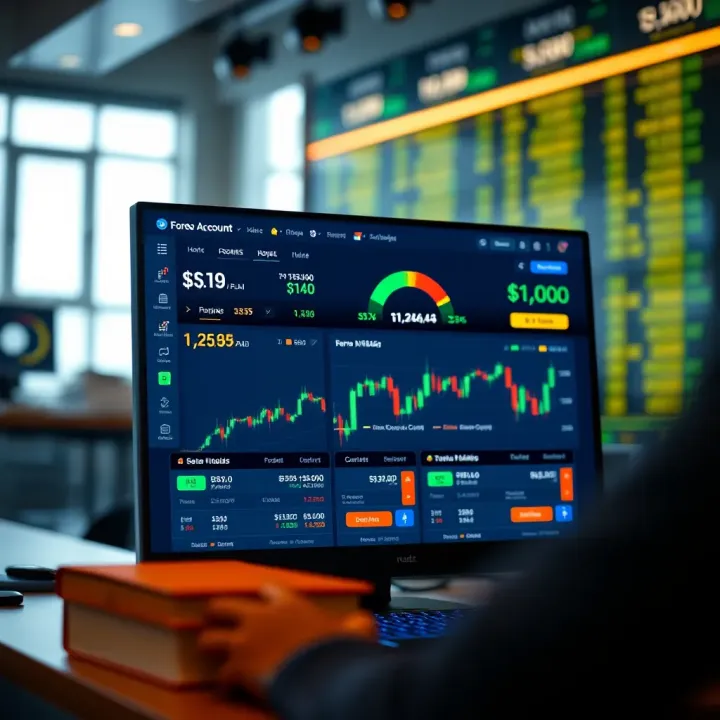
Pakistani traders often face challenges such as currency volatility against the US dollar, impact of geopolitical events, and fluctuating monetary policy by State Bank of Pakistan (SBP). Practicing with a demo account lets you better understand these factors in real-time without actual financial exposure.
Demo accounts bridge the gap between theory and live trading, allowing you to make mistakes and learn without losing hard-earned money.
Using a demo account also familiarises traders with risk management tools — stop-loss, take-profit orders, and margin requirements — all crucial when trading forex in Pakistan’s market context. For instance, understanding leverage rules imposed by brokers and regulations by the Securities and Exchange Commission of Pakistan (SECP) helps avoid unexpected losses.
In summary, a forex demo account is the first step for any trader in Pakistan who wants to build confidence and skill. It allows exploration of different trading styles—scalping, day trading, or swing trading—until you find an approach that matches your risk appetite and market outlook.
Next, we will examine how to select the right demo account and avoid common mistakes to ensure your learning period sets you up for real trading success.
A forex demo account serves as a training ground for traders, especially for those based in Pakistan looking to step into the currency market without risking actual money. It's a practice platform that mirrors real trading situations, allowing users to gain hands-on experience before committing funds. Understanding how it functions helps traders develop skills, test strategies, and explore platforms safely.
At its core, a forex demo account offers a risk-free space where you can practice trading with virtual money. For instance, a beginner in Karachi can try buying and selling forex pairs like USD/PKR without spending a single rupee. This setup allows traders to make mistakes and learn from them, which is invaluable because trading real money without experience often leads to losses.
Despite using fake funds, the demo account replicates real-time market conditions closely. Prices move as they do in the live forex market, reflecting actual volatility and economic news effects. This simulation means a trader in Lahore can see how currency pairs fluctuate during events like SBP's policy rate announcements and react accordingly, gaining realistic trading experience.
Demo accounts usually provide a virtual balance that mimics real capital, often starting at around $10,000. This amount lets traders test different positions and risk levels. Leverage options available in these accounts match those in live trading, so Pakistani traders can understand how leverage amplifies both profits and losses, a critical concept given the higher leverage permitted by some local brokers.
Using a demo account also means full use of the broker’s trading platform and tools. Whether it's MetaTrader 4, MetaTrader 5, or proprietary applications offered by brokers like IG or Saxo, traders get hands-on exposure to charting tools, indicators, and order execution features. This familiarisation helps reduce errors and boosts confidence when switching to a live account.
Forex demo accounts act like flight simulators for pilots—they prepare you for real rides but without crashing the plane. For Pakistani traders, this practice means the difference between costly trial-and-error in the live market and steady, informed trading.
In summary, forex demo accounts are practical training platforms that faithfully reproduce trading conditions and provide necessary tools and virtual capital to practise safely. They form the first step in a trader’s journey toward live forex trading success.
Using a forex demo account brings several benefits, especially for traders in Pakistan who want to explore currency trading without risking actual money. These accounts provide a safe platform to learn, test, and gain confidence, which is essential given the volatility and complexity of forex markets.
A demo account lets traders understand forex market movements without putting their hard-earned money at risk. For example, if you want to see how PKR reacts to USD during economic announcements, the demo environment simulates this using virtual funds. This hands-on practice helps you grasp timing and market patterns without worrying about losses.
This risk-free learning is particularly relevant in Pakistan where many new traders face challenges with volatile exchange rates and unexpected market swings. Practising first through a demo account avoids costly mistakes and builds a solid foundation.
Forex trading involves various strategies, like scalping, day trading, or swing trading. Demo accounts let you try these without pressure. Imagine trying a breakout strategy on USD/PKR pair during the open market hours to see how price reacts. If it doesn’t work, you lose nothing but learn valuable lessons.
Every broker provides a different interface with tools and charts. Getting comfortable with platforms like MetaTrader 4 or 5, or a broker's own app is crucial. A demo account helps you navigate order types, indicators, and reports, which reduces errors when you switch to live trading. In Pakistan, brokers often tailor platforms for local needs, so knowing your platform well is a big advantage.
Forex trading requires swift decision-making. Demo accounts offer the chance to practise placing orders, setting stop-losses, and taking profits calmly. This builds discipline needed to manage emotions when real money is at stake.
Many Pakistani traders jump into live trading too soon and lose because they lack experience with order execution and risk management. Demo accounts help bridge that gap by letting traders build confidence step-by-step.
With repeated practice over time, you develop a routine and a trading plan, improving your decision-making skills without the stress of financial loss. This prepares you for the jump to live accounts where stakes are real, and emotions can cloud judgment.
Using a forex demo account is a key first step for Pakistani traders aiming for long-term success in the forex market. It saves money, sharpens skills, and builds the confidence essential to trade effectively.
Selecting the right forex demo account broker is a vital first step for any trader in Pakistan keen on practising forex trading without risking real money. A demo account’s quality mirrors that of the broker's live trading platform, so choosing wisely saves you both time and frustration. Important factors include the broker's regulatory status, the usability of their platform, and specifics like demo account terms—each can drastically affect your learning curve and eventual success.
One of the foremost considerations is checking whether the broker holds licences recognised by reputable authorities relevant to Pakistan. Even though the State Bank of Pakistan does not directly regulate forex brokers, brokers licensed by the Securities and Exchange Commission of Pakistan (SECP) or authorised by international regulators like the FCA (Financial Conduct Authority) in the UK or ASIC in Australia offer added assurance.
Working with a regulated broker protects you from scams or unfair trading practices and ensures your data and funds are handled responsibly. For example, a broker with multiple high-standard licences is usually more reliable and transparent in matters like pricing and withdrawals. In contrast, unregulated brokers might offer demo accounts that don’t truly simulate live market conditions.
A demo account should provide a user-friendly platform that replicates the actual trading experience closely. Look for brokers offering intuitive navigation, clear charts, and responsive order execution. Platforms like MetaTrader 4 (MT4) and MetaTrader 5 (MT5) remain popular in Pakistan for their simplicity and robust features, whereas some brokers provide their own customised platforms with added tools. For new traders, a clutter-free interface helps focus on strategy rather than battling complex software.
Good brokers often include extensive educational materials alongside their demo accounts. These resources may include video tutorials, webinars, trading guides, and even market analysis specifically tailored for Pakistani traders. For instance, brokers like FXTM and IG offer such content to help beginners understand concepts like leverage, margin, and currency pairs before investing real money. Access to these helps you not only practise trading but also build strong foundational knowledge.
Different brokers attach various conditions to their demo accounts that affect usability. Pay attention to the duration your demo account remains active; some expire after 30 days, while others offer unlimited use. This matters because you need enough time to get comfortable with the trading environment.
Additionally, check the virtual funds provided. An amount that mirrors typical live trading balances, say Rs 1 million equivalent, helps simulate realistic position sizing and risk management. Furthermore, ensure the demo offers access to real-time market data rather than delayed prices, so your trading decisions reflect current market conditions.
Choosing the right demo account broker by considering regulation, platform usability, and fair demo terms equips you well for transitioning to live forex trading confidently.
Forex demo accounts serve as valuable tools for Pakistani traders to practise without risking real money. However, understanding their limitations and common misconceptions is essential before depending on them too heavily. Recognising these gaps in demo trading helps traders prepare better for the reality of live markets and avoid pitfalls that might result otherwise.
Trading with virtual money lacks the emotional impact that real losses or gains carry. When using a demo account, many traders feel no real pressure, which can make decision-making more relaxed or even careless. For example, a trader might enter larger positions or ignore stop-loss orders more casually because losing demo funds does not affect their actual finances.
This emotional detachment means demo trading often does not prepare you for the stress and discipline demanded by live trading. In live markets, fear, greed, and impatience often influence choices, requiring strong mental control. Demo accounts can teach strategy and mechanics, but they cannot replicate these emotional challenges.
Live forex trading can experience delays in order execution and slippage—where trades are filled at prices different from what you expected. This typically happens due to market volatility and liquidity. Demo accounts often show ideal conditions without these real-world hiccups.
For instance, during major news announcements affecting the PKR-dollar pair, the live market may see price gaps or delayed order fills. Demo accounts usually fail to capture this, giving a misleading impression of smooth trading. Pakistani traders using demo platforms should be aware that actual trading may involve such slippage, making risk management even more critical.
Demo trading often creates a false sense of security. Success in a simulated environment doesn't automatically transfer to live trading because real markets involve unpredictable factors like geopolitical tensions, unexpected economic changes, and infrastructure issues such as internet fluctuations or loadshedding.
For example, a trader in Karachi might execute winning trades consistently on a demo account but struggle in live trading when faced with sudden dropdowns caused by a change in SBP monetary policy or a sudden spike in US dollar demand. The live environment demands adaptability to these risks beyond what a demo account reveals.
Relying solely on demo account performance risks underestimating real market challenges, including emotional strain and execution issues. It is wise to view demo trading as a learning step, not proof of guaranteed profits.
Moving from a forex demo account to live trading is a critical step for Pakistani traders. While demo accounts offer a risk-free way to learn market dynamics and test strategies, live trading introduces real money emotions and practical challenges that cannot be simulated. Understanding this transition helps traders avoid common pitfalls and approach live markets with confidence.
Trading with real money brings emotions like fear and greed into play, which can affect decision-making sharply. In a demo account, losses don’t sting because the funds are virtual, but live trading forces you to face actual financial risk. Many traders find that the pressure to avoid losing money can lead to hesitation or impulsive moves, even with tested strategies.
Accepting that emotions will influence trading results is essential in Pakistan’s market, where volatility often spikes due to political or economic events. This means you need to prepare mentally and avoid expecting to replicate demo results immediately. Practising discipline, patience, and controlling emotions will determine how smoothly you adapt.
Remember, demo trading teaches mechanics, but live trading challenges your emotional resilience.
Funding accounts using Pakistani methods like JazzCash or Easypaisa: Opening a live forex account requires depositing funds. Pakistani traders now benefit from local payment solutions such as JazzCash and Easypaisa, which allow quick, secure transfers in Pakistani Rupees (PKR). These platforms bypass complicated international wiring processes and currency exchange hassles, making it convenient to fund accounts and withdraw profits.
Using local wallets also helps keep track of transaction costs and exchange rates, which can affect trading capital. For example, JazzCash offers direct account funding with some brokers, reducing delays and enhancing responsiveness to market opportunities.
Starting with small lots to manage risk: It’s sensible to begin live trading with small lot sizes. Smaller positions mean lower risk and help you understand live market price fluctuations and order execution nuances, like slippage and spreads, in real time. This cautious approach is particularly valuable in Pakistan, where sudden currency swings can impact trades heavily.
Trading small lots allows you to stick to your risk management plan without risking large losses. Over time, as confidence and experience grow, you can scale up gradually. This method avoids the common mistake of jumping in with large lots just because demo trading showed profits, preventing potential blows to your account balance.
Overall, transitioning thoughtfully from demo to live trading by managing expectations, using convenient funding methods, and controlling trade sizes sets a practical foundation for long-term success in the forex market.
Explore how Pakistani traders can use TradingView.com for advanced charting 📈, community insights 🤝, and smart trading tools 💡 to boost their strategies effectively!
📊 Discover how trading demo accounts work, their benefits and limits, tips for using them well, and stepping into live trading with confidence in Pakistan.

📈 Discover how Pakistani traders use chat groups to share tips, avoid common mistakes, and improve trading skills in fast-moving markets. Join the conversation!
Learn how to trade CFDs safely in Pakistan 📈. Explore strategies, risks, local regulations, and broker tips for smart trading decisions.
Based on 14 reviews