
How Pakistani Traders Can Use TradingView.com Effectively
Explore how Pakistani traders can use TradingView.com for advanced charting 📈, community insights 🤝, and smart trading tools 💡 to boost their strategies effectively!
Edited By
Edward Collins
Telegram has emerged as a go-to platform for many Pakistani forex traders seeking timely market insights. Its ease of use and instant message delivery make it a practical tool to receive forex signals, which are trade recommendations aiming to simplify decision-making.
Forex signals typically include entry price, stop-loss, and target levels for currency pairs. What makes Telegram attractive is the availability of diverse signal providers ranging from experienced traders to automated bots. However, Pakistani traders must approach these signals with careful scrutiny.
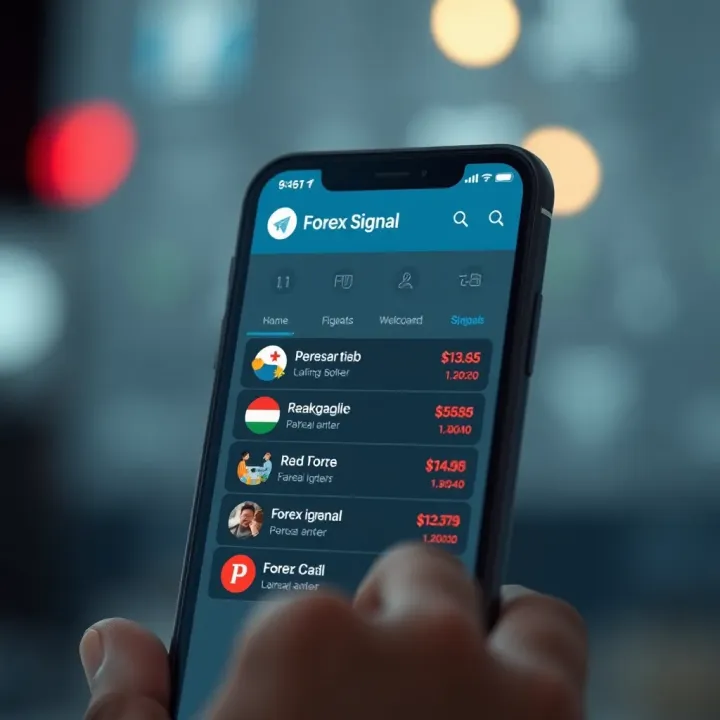
Not every signal on Telegram guarantees profits; understanding how to evaluate providers is key to avoiding losses.
In Pakistan's forex environment, relying solely on signals without grasping market fundamentals can be risky. There are no shortcuts in trading, and signals should complement your analysis rather than replace it.
To navigate Telegram forex signals effectively, you should:
Assess the track record and transparency of signal providers.
Understand associated risks such as false signals and scams.
Use signals in conjunction with your trading strategy.
Stay informed of legal aspects under the State Bank and Securities regulations.
This guide will break down these elements for Pakistani traders. By learning what to look out for and how to apply forex signals wisely, you can enhance your trading decisions confidently and safely. The objective is to empower you with knowledge rather than blind reliance on signals.
As we proceed, practical tips tailored to Pakistani market conditions will clarify how Telegram can serve as a useful resource rather than a gamble.
Understanding forex signals and how they function on Telegram is key for traders looking to make informed decisions without spending hours analysing charts individually. Forex signals provide market entry and exit points, helping traders seize timely opportunities amid volatile currency pairs. In Pakistan’s fast-paced markets, telegram signals can bridge the knowledge gap for those juggling busy routines or new to forex.
Forex signals are essentially trading suggestions generated either by professional analysts or automated systems. These signals usually include details like the currency pair to trade, the recommended action (buy or sell), entry price, stop loss, and take profit levels. For example, a signal might say: "Buy USD/PKR at 285.50, stop loss at 284.00, take profit at 287.50." This helps traders act with clearer directions rather than guessing.
There are two main kinds of forex signals: manual and automated. Manual signals come from experienced traders who analyse the market using technical charts and fundamentals. Automated signals, on the other hand, are created by algorithms or bots scanning market data to spot trends and patterns. In Pakistan, many signal providers combine both approaches to boost reliability.
Telegram stands out as a platform suited for forex signals thanks to its instant notifications, group chats, and privacy features. Traders can receive real-time alerts directly on their mobile phones, making it easy to respond quickly as markets move. The ability to create large channels and groups allows signal providers to share updates with thousands of subscribers simultaneously without delays or clutter.
Telegram’s encryption assures users their data stays safe, which is important in a market prone to scams. Plus, the app supports pinned messages and multimedia, so clear trading instructions and charts can be shared easily. In Pakistan, Telegram has become popular since many professional signal providers maintain educational groups where members discuss strategies, creating a practical learning environment.
Telegram’s combination of speed, security, and community aspects explains why so many traders in Pakistan rely on it for forex signals rather than more traditional platforms.
Trading updates on Telegram channels are accessible at any time, so whether you are at home in Karachi or commuting in Lahore, you remain connected to the market pulse. This approach fits well with local traders’ needs who often juggle other jobs or businesses alongside forex trading.
In summary, knowing what forex signals are and why Telegram is widely used helps you navigate the trading landscape with greater confidence and precision. Next, you can focus on choosing providers carefully and managing risks effectively.
Choosing the right forex signal provider on Telegram is a key step for Pakistani traders aiming to make informed decisions and minimise risks. Since the market is full of countless channels and services, not all offer trustworthy or valuable insights. Selecting a reliable provider ensures you receive accurate, timely signals that can genuinely improve your trading outcomes.
Verifying past performance is essential before trusting any signal provider. Most credible providers openly share their trade history, including entry and exit points, profit and loss figures, and win rates. For example, a Telegram channel that regularly posts screenshots or logs of closed trades with clear timings and results shows their transparency and accountability. However, always be wary of providers showcasing unrealistically high success rates without losses; these might be manipulated or cherry-picked.
Equally important is checking user reviews and testimonials. Feedback from existing clients can highlight the signal provider’s reliability, customer service, and overall value. Pakistani traders often share their experiences in Forex forums, social media groups, or within Telegram communities themselves. Positive reviews mentioning consistent profits and clear communication indicate a trustworthy channel, while repeated complaints about missed signals, delayed updates, or misleading recommendations are red flags.
Good signals provide comprehensive information that helps traders act confidently. This includes precise entry price, stop loss, take profit levels, and sometimes the reasoning behind the signal (technical patterns, news events). For instance, a provider might say "Buy USD/PKR at 286.50, stop loss at 285.80, target 288.00 because of upcoming SBP policy decision." This clarity allows traders to evaluate the signals in their own strategy context.
On the other hand, avoiding vague or incomplete recommendations is crucial. Signals that simply say "Buy EUR/USD" without further details or rationale leave traders guessing, which increases risk unnecessarily. Often, scammers or lazy providers send such incomplete signals to appear active without putting in proper analysis. Pakistani traders should expect signals to be clear and actionable, making it easier to verify effectiveness and manage risk.
Careful evaluation of forex signal providers saves not only your money but also your time and effort. Always demand transparency and don’t hesitate to test a signal service with a demo account first.
By focusing on a provider’s verifiable past results, user feedback, signal detail, and transparency, Pakistani traders can better identify reliable forex signals on Telegram and avoid falling into traps set by fraudulent channels.
Using forex signals from Telegram can be helpful, but managing risk remains essential to avoid heavy losses. Signals may provide good tips, but the foreign exchange market is volatile, and unexpected moves can turn a trade against you quickly. Traders in Pakistan should not treat signals as guaranteed profits; instead, they must manage risk carefully.
Forex markets can change in a blink due to economic announcements, geopolitical events, or sudden sentiment shifts. Even if you receive a signal on time via Telegram, network or execution delays can result in entering at less favourable prices. Imagine a signal recommending buying USD/PKR at 285.50; if by the time you act, the rate jumps to 286.10, your risk profile changes instantly. This gap can turn potential profits into losses.
Besides, rapid market swings can invalidate signals fast. A sudden decision like a central bank interest rate change or political unrest can quickly render a signal obsolete. Blindly following every signal without verifying current market conditions exposes you to unexpected drops or spikes.
Relying heavily on signals alone means you might stop analysing markets yourself. This stops you from learning critical skills like chart reading, trend spotting, and risk evaluation. Over time, overdependency leads to poor decision-making if signals dry up or turn unreliable.
For instance, during Sudan's political crisis, many signal channels failed to update timely or adapt their recommendations. Traders who depended solely on signals suffered bigger losses because they lacked the knowledge to adjust or exit swiftly. Pakistani traders should see signals as guidance, not as a replacement for their own research.
Protecting your downside is key to surviving any trading approach. Stop losses automatically exit a trade at a predetermined loss level, preventing large drawdowns. Say you enter a trade on EUR/USD following a signal, setting a 50-pip stop loss limits your maximum possible loss to that amount.
Using stop losses is especially crucial when following signals, as market conditions can change fast. It also saves you from emotional decisions, like holding onto losing trades hoping they will recover. Many Pakistani brokers offer easy stop loss features, applying these should be standard practice.
Putting all your money into one pair based on a signal can be risky. Diversify across different currency pairs to spread risk. For example, instead of going all-in on USD/JPY, spread funds between USD/PKR, EUR/USD, and GBP/USD. This cushions impact if one trade hits loss.
Also, limit the percentage of your total capital exposed on trades from signals. Experienced traders often keep exposure below 5% per trade. This conservative approach helps in managing fluctuations and preserving capital for future opportunities.
Always remember, forex signals can help inform decisions but do not guarantee success. Careful risk management protects your trading journey and long-term profitability.
Using forex signals effectively requires more than just following every alert that pops up on Telegram. Successful trading depends on how you combine these signals with your own analysis and how prudently you test them before committing real money. Let’s explore these best practices to help you avoid common mistakes and enhance returns.
Validating signals before acting is essential to avoid blind trust. Not every signal you receive is a guaranteed winner, and some might be delayed or mismatched with current market conditions. Before entering a trade based on a signal, check recent price movements and market news. For example, if a signal suggests buying USD/PKR, confirm no major political event or economic announcement is pending that could sway the market abruptly. This habit reduces the risk of losses triggered by unexpected volatility.
Incorporating technical and fundamental analysis lets you add your judgment alongside provided signals. Technical analysis includes reading charts, identifying support and resistance levels, and recognising price patterns, while fundamental analysis considers economic reports, interest rate changes by the State Bank of Pakistan (SBP), or geopolitical developments. Combining these analyses with signals offers a clearer picture. If a signal advises selling the EUR/USD but your analysis shows strong upward momentum due to positive Eurozone data, it might be wise to hold off or lower trade size.
Trialing signals without risking capital is one of the smartest moves for any new or cautious trader. Many brokers like Forex.com or XM provide demo accounts where you trade with virtual money but real market conditions. Applying signals here allows you to observe their accuracy and timing safely. This practice is especially relevant in Pakistan where traders may not have large amounts of capital and need to protect savings.
Building confidence in signal accuracy happens through consistent demo testing over weeks. By tracking which signals lead to profitable trades and which do not, you develop an understanding of which Telegram channels or providers to trust. For instance, if a signal provider's recommendations translate into a 70% success rate on your demo account, you can feel more confident transitioning to live trading. Conversely, poor results advise caution or seeking alternative sources.
Successful forex trading on Telegram comes from a critical approach—balancing received signals with your knowledge and testing before risking real money. This practical blend protects your capital and improves your chances for profit.
Using these best practices also fits well with the realities Pakistani traders face, such as market volatility influenced by political developments or exchange rate policies. Always remember, signals guide you but should never replace your own informed decisions.
Navigating the legal landscape is vital for Pakistani traders who use forex signals on platforms like Telegram. Understanding regulatory boundaries prevents trouble with authorities and helps avoid scams, which are sadly common in online trading circles today. Proper knowledge ensures you trade not only profitably but safely, respecting local laws.
The State Bank of Pakistan (SBP) regulates forex trading strictly to safeguard the country’s financial system. Pakistanis are allowed to trade forex, but mainly through SBP-licensed brokers offering access to international currency markets. The SBP also limits currency exchange and capital flows, so transactions outside authorised channels risk penalties.
This means when you receive forex signals through Telegram, you should act only within the legal framework—trading with brokers authorised by SBP. For example, a trader using signals to execute deals on unregulated platforms risks losing money without legal recourse. Being aware of SBP guidelines can save you from falling into such traps.
The Securities and Exchange Commission of Pakistan (SECP) oversees many investment services, including collective investment schemes and financial advisory roles. Forex signal providers that offer trading tips or run subscription services may fall under SECP’s regulatory scope, especially if they solicit investors.
Therefore, it's crucial to check whether a Telegram channel or signal service is registered with SECP or operates legally within Pakistan. This helps you avoid unregulated advice that could mislead and potentially cause financial loss. Confirming compliance reaffirms the legitimacy of signal providers before trusting their recommendations.
Scam signals often promise unrealistic returns, like guaranteed profits or double-digit gains monthly, which no genuine trader can assure. They may lack transparency, offering vague information—such as missing entry and exit points or no explanation for why a trade is recommended.
Other red flags include constant urgent messages pressuring you to act fast, or channels with fake testimonials and rapid growth patterns suspiciously overnight. Also, if the group demands upfront payments without trial options or refuses to share verifiable past performance, think twice.
If you spot suspicious forex signal channels on Telegram, reporting them helps protect other traders. You can first block and report the channel within Telegram itself by using the platform’s reporting feature for spam or fraud.
Beyond that, informing authorities like SECP or the cybercrime wing can be effective. While Pakistan’s legal system may take time for action, your report adds to a growing record against fraudulent operators. Vigilance and community reports deter scams and contribute to a safer trading environment.
Staying within legal guidelines and spotting scam signals early keep Pakistani traders safe while using Telegram forex signals. Always verify credentials and report doubtful activities promptly.
Explore how Pakistani traders can use TradingView.com for advanced charting 📈, community insights 🤝, and smart trading tools 💡 to boost their strategies effectively!
📈 Explore how to use Telegram trading signals safely! Learn to spot reliable tips, manage risks, and improve your trading strategy in Pakistan 🇵🇰.

📈 Discover how Pakistani traders use chat groups to share tips, avoid common mistakes, and improve trading skills in fast-moving markets. Join the conversation!
Learn how to trade CFDs safely in Pakistan 📈. Explore strategies, risks, local regulations, and broker tips for smart trading decisions.
Based on 12 reviews