
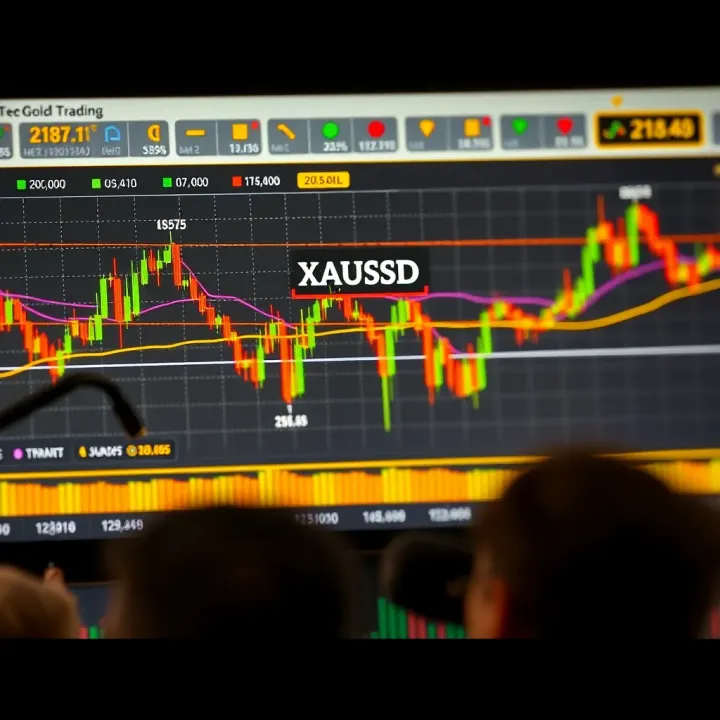
XAUUSD Technical Analysis for Gold Trading
📈 Explore detailed XAUUSD technical analysis with key patterns, trend signals & vital support/resistance levels for smarter gold trading in Pakistan’s market.
Edited By
Charlotte Evans
Gold has been a go-to asset across cultures and centuries—whether as a safety net in turbulent times or a means to stash away wealth. These days, the XAUUSD pair represents gold priced in US dollars, and it grabs the attention of traders, investors, and analysts worldwide, especially in Pakistan where gold plays a big cultural and economic role.
Understanding the price movements in XAUUSD isn’t just about watching charts. It’s a mix of economic indicators, geopolitical tensions, and market sentiment — all coming together to push prices up or down. This article aims to unpack those layers with a sharp eye on how these factors influence trends and forecasts.
We'll break things down into clear chunks:
Key economic indicators that move gold prices
The impact of global and regional politics
Technical analysis tools that traders rely on
Current market trends with some real-world examples
Practical strategies for trading gold effectively in Pakistan and beyond
By the end, you’ll have a solid understanding of how to approach the XAUUSD market with more confidence and sharper insights, whether you’re a broker, investor, or analyst. This isn’t just theory—it’s about making sense of what really drives gold prices and how to react when those forces come into play.
When gold sneezes, the market catches a cold. Knowing the symptoms and causes will help you stay ahead.
Let’s dive in and make sense of the numbers, news, and trends shaping gold prices today.
Getting a grip on XAUUSD is key for any trader or investor aiming to make smart moves in gold trading. This currency pair isn’t your everyday Forex product. It pairs gold (XAU) against the US Dollar (USD), serving as a direct measure of gold’s value in USD terms. For people in Pakistan, or anywhere else, understanding this pair gives a window into global economic health and market sentiment.
Knowing how XAUUSD works means you’re not just guessing the price of gold but joining a bigger conversation about inflation, monetary policy, and geopolitical tension. For example, when the US Dollar weakens, gold usually shines brighter, because gold prices tend to rise as a hedge against currency depreciation. Traders who watch these shifts can catch the waves early and potentially ride them for profit.
In simple terms, XAUUSD refers to the price of one troy ounce of gold quoted in US Dollars. It's a standard measure used worldwide and traded in Forex markets, allowing investors to buy and sell gold like any other currency pair. This isn't about owning physical gold but about speculating on price movements through financial instruments like spot trading or futures contracts.
This setup matters because gold acts differently from other assets. While currencies like USD, EUR, or JPY reflect economic policies and trade relations, gold tends to react more to global uncertainties and inflation fears. For instance, if inflation numbers go up, gold prices might spike because investors rush to protect their wealth.
Gold holds a unique spot in Forex because it's often seen as a "safe harbor" when currencies wobble. Unlike typical currencies backed by governments, gold carries intrinsic value and is historically trusted during economic storms. It's a hedge not just against inflation but also against political turmoil or unexpected market shocks.
In practice, gold pairs serve as a balance point. Take the US Dollar: when it strengthens, gold usually softens because it gets pricier for holders of other currencies. Conversely, if the USD slips, demand for gold often jumps, pushing XAUUSD prices higher. This seesaw effect helps investors diversify risk by shifting their funds between gold and fiat currencies based on market outlook.
Investors often flock to gold when other investments start looking shaky. It’s like that dependable old friend who shows up when times get tough. For example, during the 2008 financial crisis or the COVID-19 pandemic onset, gold prices rose as people sought to park money somewhere stable.
This safe haven status means that gold isn’t just for collectors or governments storing reserves; it's also a strategic tool in personal investment portfolios. In Pakistan, with occasional currency fluctuations and economic uncertainty, gold often serves as a shield against local currency depreciation and inflation.
Gold prices ripple across many corners of global finance. Central banks hold gold reserves to balance their currency issues, and shifts in gold prices can influence monetary policy decisions. For instance, if gold prices soar, central banks might adjust interest rates or currency interventions to stabilize markets.
At the same time, commodities, stock markets, and currencies respond to changes in gold price trends. A rising gold price can signal trouble ahead for equities, nudging investors towards safer assets. Conversely, falling gold prices might indicate confidence in the economy.
Understanding gold’s dual nature—as both a metal and a currency proxy—helps investors and traders make better calls in turbulent markets.
In summary, grasping the importance of XAUUSD and gold prices equips traders, brokers, and investors with insights to anticipate market moves and safeguard their assets effectively.
Understanding what pushes gold prices up or down is key for anyone dealing with XAUUSD. These movements are influenced by a mix of economic signals, political happenings, and natural supply-demand shifts. Without grasping these factors, predicting gold price swings can feel like guessing the wind direction in a storm.
Gold has long been known as a hedge against inflation. When inflation rises, the purchasing power of paper money falls, nudging investors to seek refuge in gold. For example, during the 1970s US inflation spike, gold prices soared as people scrambled to protect their wealth. Traders watching inflation data, like CPI numbers from the Bureau of Labor Statistics, often anticipate changes in gold prices. If inflation is heating up, gold demand may rise as investors look to shield their portfolios.
Interest rates set by central banks play a big role too. When rates go up, holding non-yielding assets like gold becomes less attractive since fixed income returns get better. Conversely, when rates drop, gold shines because borrowing costs are cheaper and alternative yields shrink. Take the Federal Reserve's cuts during economic slowdowns—gold prices commonly got a boost as a result. So, keeping an eye on announcements from central banks like the Federal Reserve or the State Bank of Pakistan can offer clues for timing gold trades.
Gold prices and the US dollar share an inverse relationship. Since XAUUSD measures gold against the US dollar, a strong dollar usually pushes gold prices down and vice versa. For instance, during USD weakness due to large deficits or loose monetary policy, gold tends to get a lift. Pakistani investors also should consider the PKR/USD exchange rate, as currency shifts can impact gold’s local price and investment appeal. Watching Forex trends gives another piece of the gold price puzzle.
When political tensions flare, gold often benefits as a safe haven. Think of moments like the Brexit vote or tensions in the Middle East—uncertainty makes many flock to gold for safety. If Pakistan faces domestic or regional political unrest, that can similarly boost local gold demand as investors seek stability.
Ongoing trade battles or sanction regimes create uncertainty in global commerce, which often drives gold prices higher. For example, US-China tariff escalations in recent years sparked jumps in gold. In Pakistan, shifts in international trade relations or sanctions can ripple through market sentiment, affecting gold as a protective asset.
The physical flow of gold matters too. Mines can’t just crank out more on demand—production depends on geology, investment, and labor conditions. When mining output drops due to strikes or technical issues, the supply tightens and prices may rise. Conversely, a mining boom or new discovery can increase supply and weigh on prices. For traders, staying updated on reports from major mining firms like Barrick Gold or AngloGold Ashanti provides insight into supply-side risks.
Not all gold demand is equal. Investment demand includes ETFs, futures, and bars, while physical demand covers jewelry and industrial use. For example, during festive seasons in India, physical gold buying surges, influencing global prices. In contrast, a spike in ETF buying signals increased speculative interest. Pakistani investors might see price moves linked to these demand shifts, so it’s worthwhile to monitor data from sources like the World Gold Council for balanced perspective.
Gold’s price dance isn’t about just one beat—it’s multiple rhythms playing together. Getting comfortable with these key influences helps traders and investors read the market’s mood and act wisely.
By tracking economic signals, geopolitical headlines, and supply-demand changes, you can better anticipate how gold prices might move and position yourself accordingly in the XAUUSD market. This practical approach is beneficial for anyone navigating the often unpredictable gold market.
Understanding the current trends in the XAUUSD market is a must for anyone dealing with gold trading or investing. These trends give a snapshot of how gold prices have been moving recently and what factors are driving those changes. For traders and investors in Pakistan, keeping up with these trends isn’t just about following global news; it helps in making well-informed decisions in a market known for its volatility and dependency on various economic forces.
By examining recent price movements and patterns alongside the broader effects of the global economic recovery, one can spot opportunities or risks earlier—and plan accordingly. For instance, with fluctuating international trade conditions and shifting economic policies, gold prices can swing unexpectedly, affecting portfolios if you’re not paying attention.
Gold prices can jump or drop significantly in the short term, sometimes within hours or days, influenced by breaking news, sudden shifts in the stock market, or geopolitical events. This short-term volatility matters because it offers chances for quick gains but also poses higher risks. For example, right after unexpected U.S. Federal Reserve announcements about interest rates, gold prices often experience wild swings as traders reassess risk.
If you are trading XAUUSD, keeping an eye on these quick shifts with tools like real-time charts and volatility indicators can help you decide when to enter or exit. But beware—chasing after every price spike requires discipline and a sound risk management strategy. Many traders use stop-loss orders to avoid large losses during unpredictable market moves.
Looking beyond the daily noise, mid-term trends over weeks or a few months reveal more about where gold prices might be heading. For example, if gold prices steadily climb amid rising inflation fears, that trend might continue until inflation eases or central banks intervene.

Mid-term trends help investors distinguish between fleeting blips and sustained movements. Analyzing moving averages or trendlines over a 30- to 90-day period is a practical method here. Such analysis is particularly useful for those with a medium-term horizon, like mutual fund managers or retail investors looking for steady returns without day trading.
After the COVID-19 pandemic shock, global economic data have been a big driver of gold prices. Data like employment numbers, manufacturing indexes, and consumer spending reveal how fast economies are bouncing back, affecting investors’ appetite for gold.
For instance, if employment data suggests strong recovery, investors might feel more confident investing in stocks rather than gold, pushing gold prices down. Conversely, weak numbers or fears of a double-dip recession can boost gold as a safe asset. Pakistan traders should monitor indicators from major economies like the U.S. and China as these heavily influence gold demand and sentiment.
Government stimulus packages injected into economies to offset pandemic impacts have a direct effect on metals like gold. When central banks or governments roll out large spending programs, the resulting increase in money supply often leads to inflation fears, pushing gold prices up.
Take, for example, the U.S. CARES Act introduced in 2020 and subsequent stimulus rounds—these helped gold rally as investors sought protection against future inflation and currency devaluation. But it's not a one-way street; over time, if fiscal stimulus leads to stronger growth without runaway inflation, that can temper gold demand.
Traders in Pakistan should keep a finger on the pulse of such international fiscal measures since they set the tone for risk sentiment and gold’s role as a hedge globally.
In essence, understanding these current trends helps craft smarter trades and investments by giving a clear picture of where gold prices have been and hints about where they might go. Whether it's riding out short-term spikes or planning for medium-term moves, incorporating global economic signals ensures a sharper edge in navigating the XAUUSD market.
Forecasting gold prices via XAUUSD requires a mix of tools and perspectives. This section sheds light on practical methods traders use to get a sense of where prices might head next. Whether relying on economic data or scanning charts, these techniques unlock clearer glimpses into gold’s often unpredictable dance.
Macroeconomic indicators act like the heartbeat of the economy, and watching them closely helps forecast gold’s direction. For example, rising inflation rates usually push gold prices up, because investors seek gold to protect their wealth against falling purchasing power. On the flip side, if reports show strong job growth or high GDP increases, gold might lose some appeal, as confidence grows in traditional currency assets.
In practice, keeping an eye on inflation figures, employment reports from the US Bureau of Labor Statistics, and manufacturing data can signal turning points for XAUUSD. When inflation ticked above 3% in 2021, many traders adjusted their gold positions accordingly. Remember, macro factors don’t act in isolation — it’s about the overall economic mood.
Central banks, especially the Federal Reserve, have a big say in gold’s fate. When interest rates rise, holding gold becomes less attractive since bullion doesn't pay yield. Conversely, loosening monetary policy or cutting rates can light a fire under gold prices.
For example, the Fed’s announcements during 2020 and 2021 greatly impacted XAUUSD. Every hint at keeping rates low or purchasing bonds sparked buying among gold traders anticipating inflation. Monitoring central bank meeting minutes, speeches, and policy changes is an invaluable part of fundamental analysis.
Technical analysis helps by tracking price behavior through charts. Recognizable patterns like head-and-shoulders, double bottoms, or flags often give clues on potential breakouts or reversals in gold prices.
Drawing trendlines can pinpoint support and resistance levels; when gold price breaks through these lines, it may trigger buying or selling waves. For instance, a break above a descending trendline on a daily XAUUSD chart could suggest a bullish trend is about to start.
Knowing how to spot these formations gives traders an edge in timing entries or exits, critical in a market as volatile as gold.
Moving averages smooth out price noise, revealing underlying trends. The 50-day and 200-day moving averages are popular benchmarks. Say the 50-day moving average crosses above the 200-day—commonly called a "golden cross"—it often signals upward momentum.
Oscillators like RSI (Relative Strength Index) or MACD (Moving Average Convergence Divergence) add another layer by identifying when gold is overbought or oversold. For example, an RSI above 70 might signal the price is stretched and due for a pullback.
Combined, these tools assist in understanding not just where the price is going, but also when it might be ready for a change.
Sometimes, gold’s price swings are less about numbers and more about trader feelings. Sentiment indicators, like the Commitment of Traders (COT) report, show whether big players are net long or short. If most traders are heavily bullish, it may hint that gold’s rally is overdone and a correction could follow.
Tracking extremes in sentiment helps anticipate market turns before they appear on charts. For instance, when retail investors rush in buying, it could be the last leg up.
News reports and social chatter can move gold prices fast. Breaking geopolitical tensions, unexpected policy moves, or even viral social media posts can swing market psychology.
A recent example: rumors about supply issues in major gold mining regions led to short-term price spikes. Traders who keep tabs on platforms like Twitter or financial news apps often spot narratives shaping XAUUSD before others do.
Staying aware of the mood around gold through sentiment and news complements the cold hard data, offering a fuller picture of what’s driving prices.
Combining these techniques equips traders with multiple lenses to view the gold market—helping to make informed decisions amidst the inherent uncertainty of metals trading.
Forecasting gold prices is tricky, and understanding the challenges involved is key for traders or investors aiming to make smart moves. Gold’s price isn’t just driven by one factor; it dances to a complex tune of economic data, political shifts, and unexpected events. This section will highlight the major hurdles you’ll face when trying to predict XAUUSD price movements, helping you approach the market with a sharper eye.
Gold has long been seen as a refuge in unstable times, but those same uncertain periods can send its price swinging wildly, making predictions tough.
Sudden geopolitical crises can send shockwaves through the gold market overnight. Think of events like unexpected military conflicts or abrupt sanctions. For example, when the Russia-Ukraine tensions escalated in early 2022, gold prices spiked sharply as traders rushed for safety. Such events aren’t predictable and can quickly shift market sentiment, causing volatility that blindsides analysts who rely on steady data trends.
To manage this, traders often keep an eye on geopolitical hotspots and factor in risk premiums during unstable times, rather than depending solely on technical charts.
Mining operations are vulnerable to natural disasters, and disruptions here can ripple through the gold market unexpectedly. Say a major gold-producing region like South Africa or Peru experiences flooding or an earthquake; the sudden drop in supply can push prices up. For instance, floods in South Africa during 2019 temporarily slowed mining output, nudging prices higher.
Because natural disasters are by nature unpredictable, their impact on gold supply adds an extra layer of uncertainty. Traders and investors might monitor newsfeeds and industry reports to spot emerging supply issues early.
While forecasting techniques are indispensable, no model is perfect. Being aware of their shortcomings prevents overconfidence and promotes better risk handling.
Many forecasting models depend heavily on historical price movements, assuming the past will repeat itself. But gold prices often defy such patterns due to unique, real-time influences. For example, relying just on past inflation trends without accounting for an unexpected central bank intervention can lead to faulty predictions.
This means traders should combine historical analysis with current event monitoring, not lean solely on charts or statistical models.
Black swan events—those rare, unforeseen occurrences that shake markets—are the bane of any forecasting tool. Take the COVID-19 pandemic: it triggered unprecedented economic shutdowns and stimulus measures, causing gold to react unpredictably.
Forecasting models can't readily incorporate these events because they lie outside usual variables. Recognizing this limitation pushes traders toward flexible strategies and hedging to cushion against such shocks.
Understanding and accepting these challenges doesn’t paralyze your trading; instead, it reinforces the need for adaptive strategies and continuous learning to navigate the XAUUSD market effectively.
By keeping these hurdles in mind, traders and investors in Pakistan and elsewhere can better prepare for the twists and turns of gold price movements.
Navigating the gold market, especially XAUUSD, demands a grounded approach tailored to local conditions. For traders and investors in Pakistan, understanding practical tips rooted in their environment can make the difference between losses and consistent gains. This section unpacks strategies that help leverage global insights while embracing Pakistan's unique financial landscape.
Exchange rates play a crucial role in determining the profitability of gold trading in Pakistan. The Pakistani rupee's weakness or strength against the US dollar directly impacts the local cost of gold. For instance, if the dollar appreciates significantly, importing gold becomes costlier even if the international price is stable. Traders should keep a close eye on the USD/PKR exchange rate movements, as sudden fluctuations can affect their entry and exit points.
It’s beneficial to use local currency derivatives or hedging strategies to cushion against adverse exchange rate shifts. For example, a trader might opt for a forward contract to lock in a specific exchange rate, thus avoiding surprises when converting profits back to rupees. Ignoring these factors can erode gains made from favorable gold price moves.
Pakistan’s financial regulations around gold trading are distinct and evolving. The State Bank of Pakistan (SBP) imposes specific rules on gold imports and exports, which affect supply and demand. Recently, import duties and controls have been adjusted to protect the local market and stabilize the balance of payments, influencing gold availability and prices domestically.
Investors should familiarize themselves with licensing requirements for trading gold or dealing in gold ETFs listed locally. Compliance with anti-money laundering guidelines and tax obligations is also key to avoiding legal troubles. Staying updated with SBP circulars and consulting with local financial advisors can provide clarity on permissible limits and documentation.
One of the best guards against sudden market swings is proper position sizing paired with stop-loss orders. Position sizing means deciding how much capital to risk on a single trade based on overall portfolio size and risk tolerance. For example, if an investor's total trading capital is PKR 1,000,000, risking 2% per trade limits the loss to PKR 20,000, preventing a single bad trade from denting the entire portfolio.
Stop-loss orders automatically close a position once the market moves unfavorably by a certain amount. For gold trading, placing stop-losses near technical support or resistance levels can help lock in profits or limit losses. Without such discipline, traders often let emotions override logic, leading to bigger losses.
Putting all eggs in one basket is a classic mistake, and gold trading is no exception. Even within gold-related assets, diversification can reduce risk. For instance, instead of only trading XAUUSD spot contracts, investors might spread capital across gold mining stocks, gold ETFs like the SPDR Gold Shares, and physical gold holdings.
Additionally, blending gold with other asset classes like equities, bonds, or foreign currency accounts can smooth out portfolio volatility. Since gold often behaves differently than stocks or currencies during economic changes, it serves as a natural hedge. Local investors should consider Pakistani equity markets or fixed income instruments alongside international ones to balance their portfolios more effectively.
Practical, risk-aware strategies tailored to Pakistan’s unique ecosystem give traders and investors a realistic edge in the gold market. Understanding local exchange rates, regulatory nuances, disciplined position management, and well-chosen diversification can make gold a rewarding part of any investment plan.
In any market analysis, especially something as nuanced as XAUUSD, it’s vital to consider alternative views and contrasting forecasts. Doing so helps traders and investors avoid tunnel vision and prepares them to anticipate different scenarios before they play out. This is particularly true for gold prices, which can swing widely due to diverse and sometimes conflicting forces. For example, while some analysts might see inflation pushing gold prices higher, others could point to strengthening economic conditions suggesting a pullback.
Considering varied perspectives allows investors in Pakistan to balance optimism with caution, adjust strategies accordingly, and manage risk more effectively. By looking at contrasting forecasts, you get a more realistic picture of where gold prices might head and why. This approach enriches decision-making and provides a handy toolkit for navigating uncertain market waters.
One of the most common reasons bullish traders pile into gold is the belief in sustained or rising inflation. When paper money loses value, gold tends to shine. Investors see it as a reliable store of wealth that doesn’t corrode or evaporate. Another factor is central banks—if institutions like the Federal Reserve continue policies like low interest rates or quantitative easing, gold often benefits because these reduce yields on bonds, making non-yielding gold more attractive.
Moreover, political instability or global crises often spark safe-haven buying. For instance, when tensions flare between major economies or unforeseen conflicts erupt, investors dart to gold like moths to a flame.
Throughout 2021 and 2022, fear of rising inflation became a significant driver for gold prices globally. In Pakistan, where inflation rates have occasionally outpaced wage growth, gold is seen as a hedge to protect purchasing power. As prices for everyday items climb, many look to gold to safeguard savings. This sentiment isn’t just hearsay; it's backed by historical trends where gold often holds its ground or even gains when inflation runs hot.
This plays out in investors’ portfolios and purchasing behaviors—demand for physical gold spikes during inflationary periods. Plus, futures markets react strongly to inflation data, often lifting gold prices ahead of official reports. So, keeping an eye on inflation expectations worldwide can give Pakistani traders an early edge.
Despite bullish cases, there are clear signs pointing toward gold price corrections. When economies begin to recover robustly, investors tend to shift funds from safe havens like gold into stocks or other higher-yielding assets. For example, in the wake of major stimulus efforts, if GDP growth surprise on the upside, gold can lose its lustre pretty fast.
Another trigger for corrections might be a tightening of monetary policy. If major central banks start hiking interest rates aggressively, it makes borrowing costlier and dampens inflation fears, removing one big reason to hold gold. This happened in past cycles when the Federal Reserve turned hawkish, pushing down gold prices noticeably.
Gold prices often have an inverse relationship with the US dollar since XAUUSD measures gold against the greenback. So, when the US dollar strengthens—thanks to better economic data, rising rates, or safe-haven flows—gold typically pulls back. For Pakistani investors, it’s worth noting that a strong USD can also impact local purchasing power.
The euro, yen, and even the Saudi riyal can sway gold pricing on different levels. When these currencies gain against the dollar, gold may weaken. For instance, during periods when the dollar index rallies, traders note a corresponding dip in gold.
Important: Monitoring currency strength and central bank moves closely can help forecast gold’s short-term swings. Traders who ignore these factors might find themselves on the wrong side of the market.
By weighing both bullish drivers and bearish signals, market participants get a better sense of the balance of power influencing gold prices. Such balanced analysis helps Pakistani traders and investors stay adaptable and informed, rather than caught off guard by sudden shifts.
Summarizing key points and looking ahead is essential in making sense of the complex gold market, especially when dealing with XAUUSD. For traders and investors, it’s like having a map after a long hike — knowing where you’ve been helps you figure out where to head next. This section ties together the analysis, providing a practical lens to interpret gold price movements and prepare for possible market shifts.
Staying alert to crucial indicators like inflation rates, US dollar strength, and real interest rates can make the difference between guessing and making informed moves. Inflation data, for example, often signals how gold might react—rising inflation usually nudges gold prices up as it erodes the value of paper currency. Also, pay attention to the US Dollar Index (DXY); since gold is priced in dollars, a weaker dollar usually gives gold a boost.
Another key indicator is the Federal Reserve’s interest rate decisions. Higher rates tend to pressure gold prices down because they raise the opportunity cost of holding non-yielding assets like gold. For traders in Pakistan, monitoring Pakistan's rupee exchange rate against the dollar is essential since local currency weakness often lifts gold’s appeal in the domestic market.
Watch out for changing investor attitudes toward gold amid economic shifts. Recently, the rise of sustainable and ethical investing has made some investors favor gold-backed ETFs with clear environmental, social, and governance (ESG) criteria. This trend could shape demand differently than traditional physical gold purchases.
Technologically, the use of algorithmic trading in gold markets is growing, leading to faster responses to news and data releases. Such developments can increase short-term volatility but also create trading opportunities if you’re prepared.
Another noteworthy trend is the growing interest in gold as a diversification tool amid uncertainty over cryptocurrencies and fluctuating bond yields. This makes gold not just a safe haven but also part of broader portfolio strategies.
Central banks around the globe, especially the US Federal Reserve, play a heavyweight role in steering the gold market. Expected shifts in monetary policy, like tightening or loosening money supply, translate directly into gold price movements. For instance, if the Fed signals slower rate hikes or pauses altogether, it often puts upward pressure on gold. On the flip side, aggressive rate hikes can dampen gold’s popularity.
Additionally, central bank gold buying — from countries like China, Russia, and Turkey — influences global supply-demand dynamics. An uptick in purchases typically reflects broader strategies to hedge against currency risks and geopolitical uncertainties.
Geopolitical tensions have always been a wildcard for gold prices. Upcoming elections, trade negotiations, or conflicts in resource-rich regions can sway investor confidence sharply. The ongoing uncertainties in areas like Eastern Europe or the South China Sea, for example, can push gold demand higher as investors seek safety.
Sanctions and trade disputes also impact supply chains and mining operations, potentially limiting gold availability and raising prices. For traders in Pakistan, keeping a close eye on regional politics and global diplomatic shifts is more than advisable — it’s a necessary part of strategizing.
In short, understanding these summary points and outlooks allows investors and traders to stay a step ahead, turning what seems like market noise into meaningful signals for decision-making.
📈 Explore detailed XAUUSD technical analysis with key patterns, trend signals & vital support/resistance levels for smarter gold trading in Pakistan’s market.

📈 Get today’s gold price updates and key factors shaping Pakistan's market. Stay informed on trends, economic signals, and smart investment tips.
📈 Get today's XAUUSD forecast with insights on gold price trends, key economic factors, and trading tips tailored for Pakistan investors and traders.
📈 Get today's XAUUSD gold price forecast with expert analysis, market trends, and technical insights. Make smarter trading decisions in Pakistan's gold market.
Based on 13 reviews