

Is Trading Halal or Haram in Islam?
Explore how trading fits within Islamic law in Pakistan 🇵🇰 Learn when trading is halal or haram, common misconceptions, and tips for ethical trading 🤝📈
Edited By
James Bennett
Quotex is an online trading platform offering binary options and other financial products. Its growing popularity in Pakistan has sparked questions about whether trading on Quotex is halal (permissible) or haram (forbidden) under Islamic finance principles. This article breaks down key aspects for traders and investors who want to align their activities with Shariah.
Binary options trading on platforms like Quotex revolves around predicting price movements of assets within short time frames. The trader chooses if the price will rise or fall, with potential fixed returns or losses depending on the outcome. Given this setup, the distinction between investment, speculation, and gambling becomes especially important to clarify.

Islamic finance prohibits transactions involving excessive uncertainty (gharar), interest (riba), and gambling (maysir). Since binary options trading involves high-risk bets on price directions, it often resembles gambling more than investing. Many Islamic scholars argue this speculative nature contradicts Shariah objectives, mainly because traders do not purchase ownership of underlying assets but merely place wagers.
Pakistani investors should understand these issues before venturing into Quotex trading. Moreover, the platform’s regulatory status and transparency come into play since under-regulated environments may expose investors to unfair practices.
Traders must differentiate between halal trading—such as stock investment with real asset backing—and high-risk speculative betting characteristic of many online binary options platforms.
To sum up, the halal or haram status of Quotex trading hinges on the nature of the contract and compliance with Islamic finance rules. Traders seeking Shariah-compliant options usually turn towards equity trading on Pakistan Stock Exchange (PSX) or Islamic mutual funds, which follow strict guidelines excluding riba and gharar.
In the next sections, we will explore Islamic trading principles in detail, examine specific concerns around binary options, and review scholarly opinions to help Pakistani traders make informed choices respecting their faith and financial wellbeing.
Grasping the basics of Quotex trading is essential before examining its compatibility with Islamic finance principles. For Pakistani traders, understanding how Quotex operates clarifies the risks involved and whether this platform suits their investment goals. It also offers valuable insight into the trading model's structure, helping investors make informed decisions.
Quotex is an online trading platform focused mainly on binary options. Unlike conventional trading where assets are bought or sold, Quotex lets users predict whether the price of an asset—like a stock, currency pair, or commodity—will rise or fall within a set time frame. For example, you might predict the price of USD/PKR will increase over the next 15 minutes. If your prediction is correct, you earn a fixed return; if not, you lose your investment on that trade.
Binary options are a form of financial betting with two possible outcomes: win a specified profit or lose the invested amount. The key feature is the fixed expiry time—traders decide not only the direction of price movement but also when it will happen. This model offers simplicity and clear risk limits, but it also means the trader often faces binary outcomes based on very short time frames.
Consider a situation where a trader places Rs 10,000 on the rising price of gold for the next 5 minutes. If gold’s price increases by expiry, the trader might get back Rs 17,000 (Rs 10,000 investment + Rs 7,000 profit). If it drops, the entire Rs 10,000 is lost. Such swift trades appeal to many looking for quick returns but carry substantial risk.
Quotex has gained traction in Pakistan due to easy accessibility via the internet and mobile apps. Many young traders are attracted by the promise of quick profits and minimal capital requirements. The platform supports deposits and withdrawals using popular Pakistani payment channels like JazzCash and Easypaisa, which simplifies transactions.
Moreover, the demand for online trading grew significantly during recent years of economic uncertainty and loadshedding, as people sought alternative income sources from home. However, regulations around binary options trading remain unclear in Pakistan, which makes knowing the platform’s mechanics and risks even more important.
Understanding the basic workings of Quotex trading helps Pakistani investors weigh the risks, ensuring they approach this market with eyes wide open rather than getting caught up in its quick-return allure.
With this foundation laid, we can turn to Islamic finance principles to analyse where Quotex fits within Shariah-compliant trading.
In Islamic finance, trading and investment are not just economic activities; they must comply with specific religious guidelines to be considered halal. For Pakistani traders and investors, understanding these principles is essential before engaging in any financial activity like trading on platforms such as Quotex. Islamic law stresses justice, transparency, and fairness in transactions to safeguard individuals and society from harm.
These three concepts form the backbone of Islamic trade laws. Riba refers to interest or usury, which Islam strictly prohibits because it generates guaranteed profit without risk, unfairly exploiting one party. For example, lending money with a fixed interest rate falls under riba.
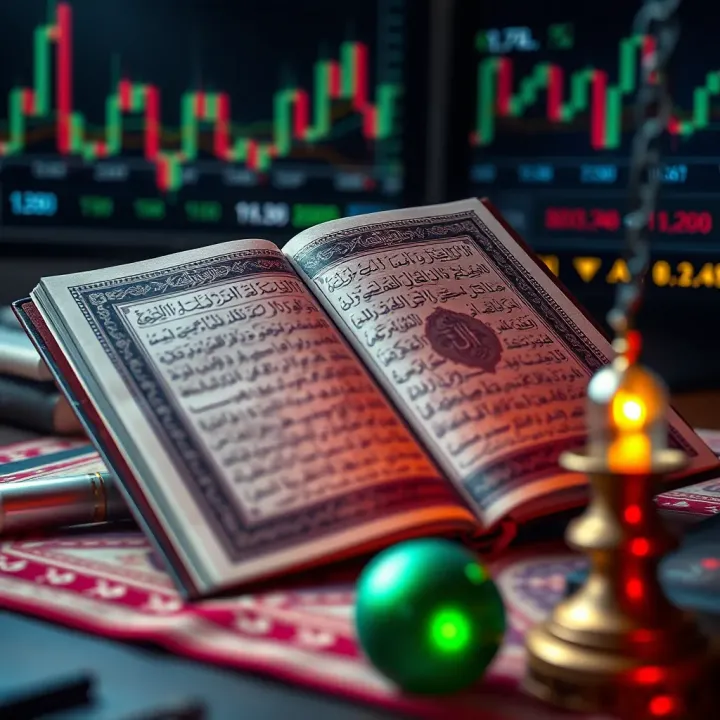
Gharar means excessive uncertainty or ambiguity in a contract. In trading, if terms or outcomes are unclear, like selling undelivered goods without clear terms, it leads to gharar. This uncertainty raises disputes and unfair losses.
Maysir is akin to gambling or betting, where gain depends purely on chance without productive effort. Lottery, horse racing bets, or forms of speculative trading that resemble gambling fall into this category and are forbidden.
These concepts aim to prevent injustice and economic harm by promoting ethical, transparent transactions that involve real economic activity.
Islam permits trade but draws the line at pure speculation. Trading based solely on guessing price movements with no asset ownership or productive purpose is discouraged. For example, buying shares in a company involves ownership and potential profit or loss linked to its real performance. However, betting on price changes purely for quick gain with high risk often veers into impermissible speculation.
Islam advises caution where uncertainty risks exploitation. Contracts must clearly state terms to avoid disputes. Traders are expected to act honestly without deception or manipulation.
Permissible trading practices include:
Selling goods or services with clear terms and ownership transfer
Investing in Shariah-compliant stocks or businesses
Engaging in profit-and-loss sharing ventures like mudarabah
Impermissible practices include:
Transactions involving riba, like interest-bearing loans
Trading based on gambling or uncertain contracts
Selling something one does not own or is uncertain to deliver
For Pakistani investors, verifying a platform’s adherence to these rules is vital. Platforms that facilitate proper ownership, clear terms, and avoid excessive risk better align with Islamic principles. This framing helps assess whether modern trading models, including binary options like Quotex, meet these religious standards or conflict with them.
Understanding Quotex trading requires assessing it through the lens of Islamic finance principles. This evaluation is essential for Pakistani traders who want to ensure their investments align with Shariah law. Islamic finance strictly forbids practices involving riba (interest), maysir (gambling), and gharar (excessive uncertainty). Identifying these elements in Quotex helps traders avoid transactions considered haram.
Riba refers to any guaranteed interest on loans or investments, which Islam prohibits. In typical banking or debt transactions, this is straightforward to spot. Quotex trading, which centres on binary options, does not involve direct lending or interest payments. However, the concern arises from how profits are made. Since Quotex rewards correct predictions without underlying asset ownership or profit-sharing, it is argued that no interest is involved. Still, the speculative nature means returns are not guaranteed, contrasting with riba’s defined, fixed interest.
Binary options trading works on a simple “all or nothing” principle: if the market moves as predicted within a set time, the trader gains a fixed return; otherwise, the stake is lost. This mechanism closely resembles gambling. Islamic teachings prohibit earning wealth from chance-based activities without productive effort or risk bearing. Since Quotex traders neither own the assets nor engage in value-adding activities, many scholars classify such trading as maysir, rendering it impermissible for Muslims.
Gharar involves transactions marked by uncertainty or ambiguity about key contract terms or outcomes. Excessive gharar is prohibited to protect both parties from exploitation. Quotex trading’s all-or-nothing outcomes and short expiry periods introduce high uncertainty. Traders often face unclear information or market manipulation risks, increasing gharar beyond acceptable limits. This excessive uncertainty makes Quotex trading incompatible with Islamic contracts, which require clarity and fairness.
Take the example of a Pakistani trader placing Rs 10,000 on a binary option predicting oil prices will rise within 10 minutes. If correct, the trader receives Rs 18,000, including profit. If wrong, the entire Rs 10,000 is lost instantly. No ownership of oil or profit sharing occurs; gains or losses rely solely on prediction accuracy. This resembles gambling more than conventional trading or partnership. Another case shows traders relying on quick, repeated bets to recover losses, highlighting the addictive and speculative nature incompatible with Islamic finance.
Traders should evaluate each financial platform for adherence to Islamic principles, not just based on potential profits but also on the means of earning. This approach safeguards their investments from falling into impermissible categories like riba, maysir, or gharar.
By analysing Quotex through these Islamic finance concepts, Pakistani investors can make informed decisions and seek halal alternatives that respect their faith and financial safety.
Understanding the opinions of Islamic scholars and financial experts is essential when assessing trading platforms like Quotex under Shariah principles. Their insights help clarify complex issues such as the permissibility of binary options trading and the practical risks involved. For Pakistani traders, this guidance bridges religious requirements with modern financial realities.
Most Islamic scholars agree that binary options trading generally falls under gambling (maysir) due to its speculative nature and the all-or-nothing outcome based on short-term price movements. This consensus stems from the fact that such trading often involves high risk, uncertainty, and no tangible ownership of the underlying asset. Scholars from various Islamic finance institutions have emphasised that contracts lacking clear asset ownership and involving chance rather than skill are not permissible.
For example, the Fiqh Academy of the Organisation of Islamic Cooperation has issued rulings highlighting the problematic nature of contracts where a party wins or loses money based on pure prediction, without real economic activity. Many Pakistani scholars echo this view, cautioning traders against such speculative ventures that may lead to financial harm and religious non-compliance.
That said, some scholars and financial experts argue that not all forms of binary options trading are strictly haram if the conditions of a valid contract and transparency are met. They stress that if the trading involves actual market prices, no deception, and both parties have clear terms, it may be permissible on a limited basis.
Others point to the need for detailed Shariah-compliant frameworks to govern such trading, which so far have not been fully established for platforms like Quotex. These perspectives usually emphasise strict risk management and avoiding excessive uncertainty (gharar).
For instance, a few Islamic finance professionals suggest that if a platform offers ownership rights or connections to real assets and limits speculation, it might be acceptable, though this remains a minority view.
Pakistani traders looking to stay within Shariah boundaries should avoid binary options trading on platforms like Quotex, given the widespread scholarly concerns. Instead, they should focus on investments known to comply with Islamic finance principles.
Practical recommendations include:
Engaging in Shariah-compliant stock trading through Pakistan Stock Exchange (PSX) with guidance from a registered Shariah advisor.
Exploring Islamic mutual funds and sukuk (Islamic bonds) offered by reputed local financial institutions.
Using Pakistani trading platforms that have received PTA (Pakistan Telecommunication Authority) approval and align with Islamic rules.
Pakistani traders must prioritise transparency and real asset ownership to ensure compliance. Consulting local scholars and financial experts is advisable before investing.
In summary, while the consensus leans towards deeming Quotex trading as non-compliant with Islamic finance, recognising differing views helps traders make informed decisions grounded in both religious and practical considerations.
For Pakistani investors seeking trading options that respect Islamic law, exploring alternatives to platforms like Quotex is necessary. These alternatives avoid the inherent uncertainties and gambling characteristics tied to binary options. Instead, they offer opportunities grounded in recognised Shariah principles, helping investors grow wealth responsibly.
Stock and Forex trading can be halal if done within Shariah guidelines. In Pakistan, many brokers now offer Shariah-compliant accounts where trading excludes companies involved in prohibited activities like alcohol, gambling, or interest-based financing. For example, investing in shares of cement or textile companies, which conduct their business ethically, is generally permitted. In Forex, trading currency pairs is allowed if it avoids speculation and immediate exchange, following tayyib (permissible) principles. Traders must use brokers accredited with Pakistan Stock Exchange (PSX) and ensure their contracts avoid interest (riba) and excessive uncertainty (gharar).
Islamic mutual funds are another practical halal investment option in Pakistan. These funds pool money and invest in Shariah-compliant stocks or sukuk (Islamic bonds), offering diversification and professional management. Sukuk, in particular, provide stable income streams by representing ownership in tangible assets or projects rather than interest-bearing loans. For instance, many Pakistan-based Islamic banks like Meezan Bank and Al Baraka offer sukuk products aligned with Shariah boards’ directives. These options give investors a way to participate in capital markets without violating Islamic rules on riba or gambling.
Several local platforms specifically cater to halal trading demands. Pakistan Stock Exchange (PSX) launched initiatives to promote Islamic finance products, and brokers like Arif Habib Limited provide fully Shariah-compliant trading services. Besides, digital wallet providers such as JazzCash and Easypaisa are integrating halal investment options, making it easier for small investors to participate. Using native platforms not only ensures compliance but also matches Pakistani market conditions and regulations, supporting better risk control and transparency.
Investors looking for halal trading must focus on transparency, asset-backed transactions, and avoiding excessive risk. Pakistani investors benefit from the growing ecosystem of Shariah-compliant products and services that provide clear alternatives to risky binary options like Quotex.
Exploring these alternatives helps you invest confidently without undermining your religious values, while still aiming for reasonable financial returns.
Explore how trading fits within Islamic law in Pakistan 🇵🇰 Learn when trading is halal or haram, common misconceptions, and tips for ethical trading 🤝📈

Discover whether Pepe Coin meets Islamic finance rules 🌙. Learn about halal vs haram crypto, risks, and tips for Muslim investors in Pakistan 📉📈.

Explore Quotex for online trading in Pakistan! Learn features, registration tips, benefits, risks, and how it compares to other platforms. 📈💡

📊 Explore trading on Quotex with our guide tailored for Pakistan! Learn account setup, trade types, risk tips, strategies & legal insights to trade smart.
Based on 8 reviews