
Trading Charts Guide for Pakistani Traders
📈 Explore trading charts types, key indicators, and expert tips tailored for Pakistani traders to enhance market decisions and avoid common pitfalls.
Edited By
Oliver Shaw
Trading in Pakistan's financial markets has grown significantly with more individuals and institutions joining the fray. But with opportunities comes the challenge of understanding what's happening in the markets. Trading charts are an invaluable tool in this regard. They help break down complex price actions into visuals that are easier to analyze.
Before diving deep, it’s important to recognize why learning to read trading charts correctly is a game-changer for any trader in Pakistan. It’s not just about spotting trends or guessing the next move; it’s about making decisions based on solid evidence.
In this article, we'll cover the essentials—from types of charts you'll encounter to how to interpret them with relevant examples from Pakistan's stock exchanges and forex markets. We'll also talk about technical indicators that actually make a difference and common mistakes traders often make, so you can steer clear of them.
Understanding trading charts is like learning the language of the market—it empowers you to make smarter, informed moves instead of throwing darts in the dark.
Let’s get started by laying out what trading charts show and why they matter for your investment journey.
Trading charts are like the roadmap for anyone stepping into the buying and selling world — especially in Pakistan’s fast-moving markets. They give a visual snapshot of how prices behave over time, making it easier to spot trends and patterns that might affect your trading decisions. Whether you're trading stocks on the Pakistan Stock Exchange (PSX) or currency pairs in the Forex market, understanding these charts lays the groundwork for smarter, more informed choices.
Charts help cut through the noise of market fluctuations by presenting data simply and clearly. For example, if you see a stock price steadily climbing over weeks in a candlestick chart, it might signal a good time to buy. The significance lies in turning raw numbers into something actionable, allowing traders to anticipate shifts and react faster.
Trading charts are graphical tools showing an asset’s price movements over selected timeframes. They display data points such as opening price, closing price, highs, lows, and volume, compiled in a way that's easy to analyze. In essence, these charts are a quick-access window into the asset’s past performance, helping traders infer potential future movements.
They're much more than pretty visuals—charts provide real insights. For example, a candlestick chart on the PSX for a textile company might reveal a pattern suggesting strong buying pressure during last month’s trading sessions. Having this knowledge means a trader can plan entries or exits with less guesswork.
Without charts, traders would be flying blind, relying heavily on gut feelings or delayed information. Charts allow for objective analysis, reducing emotional guesswork. Using them, a trader can set clear entry or exit points, identify reversals, or evaluate volatilities.
Moreover, charts help manage risks by highlighting support and resistance levels—those price floors and ceilings where an asset tends to bounce or reverse. For instance, if a certain stock keeps bouncing around 100 PKR, a trader might confidently buy near that point, knowing it usually doesn’t go lower easily.
Pakistan’s trading environment is unique with its own set of challenges like political shifts, currency fluctuations, and sector-specific regulations affecting price movements. The PSX, currency markets, and commodities like oil and gold respond sharply to both local and global events.
Charts present these impacts in a digestible format. For example, during the fiscal budget announcements, certain sectors might spike or plummet visibly on the charts, allowing traders to capitalize or protect themselves quickly.
For Pakistani traders, charts bridge the gap between global market trends and local realities. Since many Pakistani traders deal with limited access to in-depth research, charts become an invaluable self-help resource.
Additionally, local events such as political elections or international relations often cause sudden jolts in market prices. Having a solid grasp of chart reading means traders can make sense of these movements instead of being blindsided.
Understanding charts isn’t just an added skill; it’s a necessity in Pakistan’s volatile trading setup. It empowers traders to make calculated decisions rather than wild guesses.
In short, getting comfortable with trading charts is the first step towards mastering market action in Pakistan. It paves the way for understanding deeper analysis, which ultimately translates to better trading outcomes.
Trading charts are the backbone for many traders in Pakistan, where markets range from the Pakistan Stock Exchange to emerging commodities. Knowing which chart to use can mean the difference between spotting a good trade or missing it entirely. This section walks through the main chart types you’ll encounter, breaking them down by their features and practical uses.
Line charts are the simplest type of trading chart. They connect closing prices over a set time interval with a continuous line. This simplicity strips away distractions, making it easy to spot general price trends at a glance. For beginners, especially those new to Pakistani markets like the PSX, line charts offer a clean introduction without overwhelming details.
Unlike bar or candlestick charts, line charts don't provide info about highs, lows, or opening prices, but they make spotting the overall direction straightforward. For example, if you notice a steady upward slope in the line chart of a company like Engro Corporation, you get a quick feel for general bullish momentum.
Line charts are ideal when you want a quick snapshot of price movement over a longer timeframe, such as tracking monthly stock price trends. They suit initial market analysis and presentations where clarity trumps detail. If you're trying to understand market sentiment without diving deep into every session’s price swings, line charts give an efficient overview.
For instance, a trader following the Karachi Cotton futures might use a line chart to check seasonal trends across several months before drilling down with more detailed charts.
Bar charts pack more info than line charts by showing Open, High, Low, and Close (OHLC) prices for each time interval. Each vertical bar stretches from the lowest to the highest price. Small horizontal ticks on the left and right side indicate opening and closing prices respectively.
This format lets traders quickly assess price ranges and volatility for a given period. For Pakistani traders handling volatile assets like oil or currency futures, bar charts reveal more nuances about daily swings than line charts could.
Because bar charts give more data points, they help identify patterns such as gaps, wide price ranges, or narrow consolidations. This is crucial when you want to measure momentum or detect reversal signs.
For example, if a trader is analyzing Habib Bank Limited (HBL) shares, the bar chart reveals whether the stock consistently closes near its high or low during the day, hinting at internal market pressure.
Bar charts are a handy middle ground—they balance detailed data without the visual density of candlestick charts.
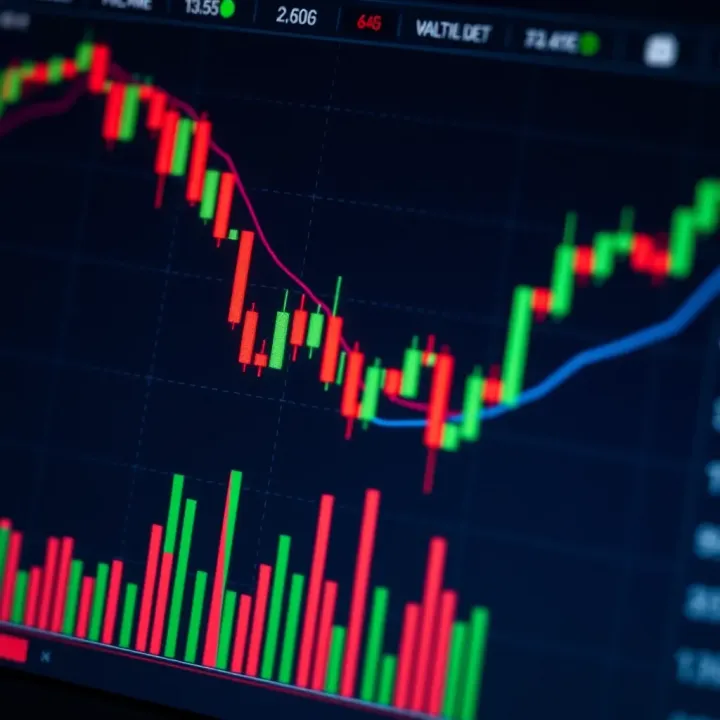
Candlestick charts boil down the OHLC data into visuals that are instantly readable. Each candle shows the open and close as the body, while wicks represent highs and lows. A filled body typically means the price closed lower than it opened, while an empty or lighter body means it closed higher.
Pakistani traders often turn to candlesticks because the patterns formed reveal buyer and seller sentiment at a glance. For example, a long wick on the bottom of a candle in Oil & Gas Development Company Limited (OGDCL) shares might show buyers pushing back price drops.
Candlestick patterns like Doji, Hammer, or Engulfing can highlight potential reversals or trend continuations. A Doji, where the open and close prices are almost identical, signals indecision in the market and could suggest a shift in momentum soon.
In Pakistan’s markets, spotting a bullish engulfing pattern after a downtrend in the banking sector stocks signals that buyers might be stepping in, a cue for traders to watch closely or even consider buying.
Tip: Combine candlestick patterns with volume indicators to confirm the strength of the signal before acting.
Understanding when and how to use these charts can sharpen your market insight and improve your trading decisions. Line charts offer a bird’s eye view, bar charts add depth with OHLC data, and candlestick charts deliver detailed mood swings of the market. Armed with this knowledge, Pakistani traders can navigate their markets more confidently.
Grasping the key components of trading charts opens the door to making well-informed decisions in the stock market. For Pakistani traders, where market conditions can be quite volatile and influenced by both local and international events, understanding these components isn't just helpful—it’s necessary. These building blocks include price scale, timeframe, and volume indicators, each playing a distinct role.
Take the price scale, for example: it tells you exactly how much the price is moving, often measured in rupees or cents, and helps you see how much you could gain or lose per unit. Without knowing how to read this, you’d be flying blind. Timeframes are equally important—they show you the period each candle, bar, or point represents. Whether you want a quick snapshot of a minute-by-minute change or a broader view spanning weeks, choosing the right timeframe determines how you interpret price actions.
Volume indicators add another layer of insight. They reveal how much of a security changed hands during a particular period, telling you if activity is heating up or cooling down. For Pakistani traders, where market depth can fluctuate widely, volume can signal when a move is backed by solid interest or just a fleeting spike.
At its core, the price scale reflects the value of a stock or asset over time. In charts, you'll often see this along the vertical axis, measured in Pakistani rupees or points. Watching price rise or fall here shows the profit or loss you might face. Let’s say Lucky Cement’s share price jumps from 800 PKR to 850 PKR within hours; understanding the scale means you recognize that’s a 6.25% increase, important info for timing your trade.
Price changes are often shown with specific chart types like candlesticks, where each candle's height represents the price difference within the timeframe. Being familiar with this helps you quickly estimate movements without extracting raw data from elsewhere.
Picking the right timeframe hinges on your trading style. Day traders focusing on quick profits might prefer 5-minute or 15-minute charts to catch rapid swings. Deep-pocket investors, looking at the long haul, often work with daily, weekly, or even monthly charts.
Imagine you’re tracking Pakistan Stock Exchange’s latest sectors. Using a daily chart reveals broader trends over weeks, while a 1-hour chart lays bare the intraday volatility. You want to pick a timeframe that matches your trading goals and patience. Don't get stuck in a short timeframe if you’re playing the long game—it's like trying to watch a cricket match one ball at a time.
Volume indicators show how much trading activity is occurring. High volume means lots of buyers and sellers are involved, while low volume signals less interest. For Pakistani markets where trading volumes can swing dramatically around political news or economic reports, volume keeps traders alert.
For instance, if the volume spikes alongside a price increase in Habib Bank Limited shares, it’s a green light that many traders believe that price move has substance.
Volume doesn’t just tell a story—it confirms others. A price jump without matching volume might be a false alarm. Conversely, when volume and price move together, it strengthens the trustworthiness of the signal.
Say you notice a breakout of a resistance level on a Pakistan Oilfields price chart. If volume surges during this breakout, that supports the idea price will keep climbing. Lack of volume here would make you wary, as the move might fall flat.
Always look at volume alongside price—for Pakistani traders, it separates the noise from genuine market moves.
Understanding these components can really sharpen your edge in the market. By paying attention to price scales, wisely choosing chart timeframes, and interpreting volume properly, you’ll be better equipped to read trading charts like a pro and avoid rattling nerves caused by unclear signals.
Being able to read and understand price movements is the backbone of successful trading. In the Pakistani market, where fluctuations can be quite sharp due to various economic and political factors, interpreting these movements correctly gives traders a distinct edge. It isn’t just about spotting if prices are rising or falling — it’s about knowing the ‘why’ and ‘how’ behind those shifts so you can make smarter decisions.
Accurately interpreting price action helps you anticipate market behavior, avoid common pitfalls, and time your trades better. For instance, understanding when a stock in the Pakistan Stock Exchange (PSX) is gaining momentum or facing resistance can save you from jumping in too early or holding on too long. Traders often say, "Don’t follow the herd blindly," and price interpretation lets you see beyond the crowd’s noise.
Spotting trends is like reading a story about what the market is thinking. An uptrend means prices are generally climbing, marked by higher highs and higher lows. Downtrends are the opposite, with lower lows and lower highs. Recognizing these helps you decide whether to buy or sell — for example, an uptrend might suggest holding on or buying more, while a downtrend could mean it’s time to sell or stay out.
In Pakistan’s market, certain sectors like textiles or energy may enter uptrends due to government policies or seasonal demand, and knowing how to identify these can boost your gains. To spot a trend, look at the price chart over weeks or months. If the slope is upward overall, you’re likely looking at an uptrend.
Trendlines are simple but powerful tools that you draw by connecting the lows in an uptrend and highs in a downtrend. These lines help you visualize the direction and strength of the trend—think of them as boundaries that price action rarely breaks. If the price crosses a well-established trendline, it might signal a change in direction.
For practical use, grab a charting platform popular in Pakistan like MetaTrader or TradingView, and draw your trendlines along recent price highs or lows. The trick is not to connect every peak or valley but the most significant points that align well. Traders often watch these lines for ‘bounces’ where price respects the trend or ‘breakouts’ where price moves beyond it, signaling a possible reversal.
Support and resistance levels act like invisible floors and ceilings on a chart. Support is the price level where demand is strong enough to stop prices from falling further. Resistance is where selling pressure is enough to halt rising prices. These levels are crucial because they show where the market might pause or change direction.
Why does this matter? If you know a stock has repeatedly bounced off a certain price, it’s sensible to expect it might do the same again. This knowledge is gold when setting stop-loss orders or planning entry points. In Pakistan’s volatile market, ignoring these levels could mean losing out on local market upsides or suffering bigger dips.
You can find support and resistance by looking for areas where prices have reversed several times before. This might appear as a flat line or a horizontal zone on a chart where multiple candlesticks’ highs or lows cluster.
For example, if the stock of a major Pakistani company like Habib Bank Limited (HBL) repeatedly drops to around PKR 100 and then bounces back, PKR 100 acts as a support level. Similarly, if it fails to break above PKR 110 several times, that’s a resistance level.
Look for:
Multiple touches: The price hitting the same level several times.
Volume spikes: Higher trading volume at these levels adds strength.
Psychological prices: Round numbers often act as support/resistance (like 50, 100, or 500 PKR).
Remember, support and resistance aren't exact prices but zones. It’s wise to allow some room for price fluctuation rather than fix on a single number.
Spotting these levels can help manage your trades better — for example, placing buy orders near support or sell targets near resistance.
Understanding the flow of prices with trends, trendlines, and support/resistance allows Pakistani traders to read market signals more clearly and act accordingly. Keeping a close eye on these basics sets the stage for wiser trades and fewer surprises down the road.
Technical indicators are vital tools that help traders make sense of price movements beyond just what the raw charts show. Especially in Pakistan's dynamic markets, these indicators provide crucial clues about momentum, strength, and possible reversals. When combined with trading charts, technical indicators give Pakistani traders a more rounded picture, helping to reduce guesswork.
Think of technical indicators as the speedometer or fuel gauge in a car — charts show you where you’re going, but indicators tell you how fast or how much power you’ve got left. Without them, you might miss early warnings or entries.
Moving averages (MAs) smooth out price data to reveal trends more clearly. They help traders to filter out the “noise” of daily price fluctuations, making it easier to spot the overall direction.
A Simple Moving Average (SMA) calculates the average price over a set period—say 20 days—equally weighting each day. In contrast, an Exponential Moving Average (EMA) gives more weight to recent prices, reacting faster to new information. For example, if the Pakistan Stock Exchange sees a sudden rally, the EMA will pick it up sooner than the SMA.
For a Pakistani trader, choosing between SMA and EMA depends on style. Day traders often prefer EMA for its responsiveness, while longer-term investors might use SMA to confirm a stable trend.
Moving averages are used not just to spot trends but also to generate signals. A common method is the "moving average crossover". When a shorter-term MA crosses above a longer-term MA, it signals a potential buy; the reverse suggests a sell.
Imagine the 10-day MA crossing above the 50-day MA for a company like Engro Corporation — this could signal new momentum. Conversely, if the crossover happens during low volume, traders should be cautious and seek confirmation from other indicators.
RSI measures the speed and change of price movements, indicating overbought or oversold conditions. It ranges from 0 to 100 and shows if a general asset is getting overhyped or dumped.
An RSI above 70 usually suggests an overbought market, hinting that prices might pull back soon. Below 30 implies oversold levels, potentially signaling a bounce back. For instance, if the RSI for Pakistan’s forex market rubs near 80, it might warn traders that the rupee is too strong and due for correction.
RSI should not be used alone. It works well with other indicators. For example, if RSI signals oversold but price hits a strong support level on the chart, this double confirmation increases the chances of a profitable trade.
Avoid blindly reacting to RSI extremes. Sometimes prices run hot and stay oversold or overbought longer than expected, especially in markets with strong trends like the KSE.
MACD is a momentum indicator that shows the relationship between two EMAs. It helps traders spot changes in strength, direction, momentum, and duration of a trend.
MACD consists of three components:
The MACD line (difference between 12-day and 26-day EMA)
The Signal line (9-day EMA of the MACD line)
The Histogram (difference between MACD line and Signal line)
This setup provides a clearer picture about when momentum is picking up or fading.
A common trading signal occurs when the MACD line crosses above the Signal line (a buy signal) or below it (a sell signal). In addition, when the histogram shifts from negative to positive or vice versa, it confirms momentum changes.
For example, if Pakistan Oilfields Limited’s MACD line crosses above its Signal line on decent volume, a trader might see this as a buy opportunity. Conversely, if MACD is showing divergence from price (price going up but MACD trending down), this can warn of a potential reversal.
Using technical indicators alongside charts can save traders from impulsive decisions. They serve as the checks and balances that help Pakistani traders sharpen their timing and reduce risks.
In short, mastering these indicators—moving averages, RSI, and MACD—offers a solid foundation. Each adds its own flavor to reading the market’s pulse, helping traders make smarter, more informed moves.
Recognizing chart patterns is like reading a market’s mood through its own story. For Pakistani traders, understanding these patterns can be a game-changer, offering clues not just about price direction but also about potential turning points. These patterns help make sense of market noise, serving as signals to plan entries or exits sensibly.
The Head and Shoulders pattern marks a shift in market sentiment from bullish to bearish, or vice versa when it appears upside down. It consists of three peaks: a higher middle peak (the head) flanked by two lower peaks (the shoulders). This pattern generally hints at a trend reversal after a sustained price move.
In the Pakistan Stock Exchange (PSX), spotting a Head and Shoulders can warn traders of an impending downturn, giving them a chance to close longs or set stop losses. For example, if the stock SYS Telecom consistently hit highs followed by this pattern, it might signal profit-taking time. To use it effectively, watch for volume confirming the pattern – volume often rises on the left shoulder and head, declining on the right shoulder.
These patterns illustrate clear psychological resistance or support levels being tested twice without success. A Double Top shows price hitting a ceiling twice, suggesting buyers can’t push higher and sellers might take over. Conversely, a Double Bottom signals strong support with two dips at a similar price level, hinting at a potential bounce.
Traders on the PSX or Forex platforms can watch for these patterns to time reversals. For instance, a double top forming around Rs. 120 on a Cement company’s shares might indicate an upcoming sell-off, while a double bottom near Rs. 80 might suggest buying pressure is solid. Confirmation happens when prices break the “neckline” – the lowest or highest point between the two peaks or troughs.
These short-term patterns show pauses in strong trends, usually signaling the trend will carry on once the pattern ends. Flags appear as small, rectangular consolidation areas slanting against the prevailing trend, while Pennants look like tiny symmetrical triangles after a sharp price move.
Traders should see them as quick breathers rather than end signals. For instance, after a big upward surge in Lucky Cement’s stock price, spotting a flag pattern could hint that the rally will resume soon. The key is volume: a drop during the pattern and a picked-up volume on the breakout confirms continuation.
Triangles provide a broader look at market indecision, narrowing price action between converging trendlines. There are three types: symmetrical, ascending, and descending.
Symmetrical triangles indicate a battle between buyers and sellers, breaking out in either direction.
Ascending triangles often predict bullish breakouts, with a flat upper trendline and rising lower line.
Descending triangles usually precede bearish moves, with a flat lower trendline and descending upper line.
Pakistani traders might see these on market leaders like Engro Fertilizers during periods of consolidation. Understanding the breakout direction after a triangle formation helps set trading targets and stop losses with more confidence.
Recognizing these chart patterns is about more than spotting shapes; it’s reading the crowd psychology behind the moves. Combining this insight with volume and other indicators boosts the odds of smart trading.
By mastering these patterns, traders in Pakistan can navigate the ups and downs of markets like PSX more expertly, turning raw price data into practical trading decisions.
Using trading charts effectively requires more than just knowing the basics. For traders in Pakistan, understanding how to navigate charting platforms and avoiding common pitfalls can make a real difference in trading outcomes. This section covers practical advice tailored to the local trading scene, helping you optimize your chart-based strategies.
When selecting a charting platform, make sure it offers real-time data, clear visuals, and easy-to-use tools. For instance, the platform should allow you to customize timeframes, add multiple technical indicators, and draw trendlines smoothly. Efficient chart zooming and panning features save time during quick market moves. Another must-have is stable connectivity that prevents delays or freezing during important trades. Some platforms also provide alerts for price movements, which can be a big help if you’re not glued to your screen all day.
Besides functionality, consider platforms with good mobile apps, as Pakistani traders often rely on smartphones for trading on the go. Platforms should also support the Karachi Stock Exchange data accurately, reflecting live market changes without lag.
Many Pakistani traders lean towards MetaTrader 5 due to its wide array of tools and compatibility with forex brokers active in the region. TradingView is gaining traction for its user-friendly interface and strong community of traders who share chart ideas. Local broker platforms like PSX Trade and Mettis Global also offer integrated charting with live market feeds.
Choosing a platform that matches your trading style and assets is crucial. For example, if you trade commodities like cotton or sugar, ensure the platform supports futures and commodities charts. Check reviews and test free versions when possible before committing financially.
Charts offer valuable insights, but relying solely on them can lead to overtrading — where a trader makes too many trades based on minor signals. This often burns through capital quickly, especially in volatile markets like Pakistan’s forex or equities. It’s a trap to jump into every opportunity the chart suggests without considering trade quality or risk management.
A practical approach is to set strict entry criteria and trade only when multiple signals align. For instance, confirm a candlestick pattern with volume spike and RSI confirmation rather than acting on a single chart pattern. Overtrading also leads to emotional fatigue, making traders prone to mistakes.
Charts paint a picture confined to price and volume data, but surrounding economic and political factors in Pakistan can swing markets strongly. Ignoring these gives an incomplete picture. For example, a sudden change in SBP’s monetary policy or political unrest can cause erratic market behavior that charts alone can’t predict.
Successful traders stay informed through local financial news, government announcements, and global market trends affecting Pakistan. Blend chart analysis with fundamental events to avoid surprises. For example, before a key report on inflation or exports, expect increased volatility even if charts look stable.
Remember: Trading is a blend of art and science. Charts provide patterns and signals, but pairing them with real-world awareness greatly improves your chances of making smart trades.
By following these practical tips, Pakistani traders can build a balanced approach, make better use of charting tools, and avoid costly errors that often trip up less experienced market players.
Using fundamental analysis alongside trading charts helps traders in Pakistan form a clearer picture before making decisions. While charts show where prices have been and hint at future movements, fundamentals reveal the why behind these shifts. Combining both brings a more balanced approach, reducing blind spots that either method might have when used alone.
Integrating fundamental data with charts improves decision-making by providing context. For example, a sudden price jump on a candlestick chart might look like a strong buying signal. But if this price spike happens alongside disappointing earnings or a government policy change, the fundamentals warn traders not to jump in blindly.
A solid approach is to use charts to time entry and exit points but rely on economic indicators, company reports, and sector performance for the bigger picture. This prevents falling into traps during volatile phases when charts can be misleading without fundamental backing.
In Pakistan’s markets, fundamentals like the State Bank’s interest rate decisions, inflation reports, or agricultural output reports often affect sectors differently. For instance, a rise in oil prices can hit Pakistan’s energy companies’ stock prices due to higher input costs, even if their charts show a short-term rally. Traders who understand these links can avoid costly mistakes by not relying solely on price patterns.
Similarly, political developments such as budget announcements or changes in trade policy can suddenly shift currency and equity markets. Watching these alongside chart action equips traders with a clearer risk outlook.
Economic reports like GDP growth, inflation rates, or trade balances offer clues about market direction. When the Pakistan Bureau of Statistics releases inflation data, price charts might react with increased volatility. For example, a higher-than-expected inflation number could push the Pakistani rupee lower against the US dollar, which would reflect quickly on forex trading charts.
Incorporating this news helps traders anticipate potential shifts instead of reacting late. It also aids in avoiding false breakouts on charts caused by temporary news spikes.
Political stability heavily influences Pakistani markets. Elections, policy changes, or even rumors impact investor sentiment and price movements. For instance, during general elections, markets may become choppy or trend sideways, regardless of what the charts show.
Traders must watch political news closely to avoid misreading chart signals during such times. Knowing when a market move is backed by solid political developments rather than just technical fluctuation can prevent unnecessary losses.
Remember, charts tell you how prices move, but fundamentals tell you why they move. Reading both is the key to smarter trading in Pakistan’s complex market.
Together, fundamental analysis and charting offer a fuller toolkit. Pakistani traders who balance these approaches stand a better chance of spotting genuine opportunities while steering clear of traps.
Trading charts are more than just a visual tool—they’re the backbone of a smart trading strategy. For Pakistani traders navigating markets like the Pakistan Stock Exchange (PSX) or the Forex market, building a strategy around charts means using them as a roadmap to make sound decisions. The key here is knowing exactly when to jump in or out of a trade and how to manage your exposure.
A solid strategy doesn’t just rely on spotting trends or patterns; it combines those signals with a clear plan for entering and exiting trades, alongside proper risk management. Without this, even the clearest chart signals might lead to losses instead of gains. Think of it as driving with a map instead of just following random road signs—charts tell you where to go, but your strategy decides when and how to get there safely.
Using chart signals for timing trades is about catching the market’s rhythm. Charts offer signals, like support and resistance breaks, candlestick patterns, or moving average crossovers, that indicate when prices might move up or down. For example, a Pakistani trader using a candlestick pattern like a bullish engulfing near a support level on PSX shares can spot a likely entry point. Waiting for confirmation, like increased volume alongside that pattern, can sharpen the timing and reduce guesswork.
Similarly, exit points often involve spotting signs of weakening momentum or reversal patterns. If a trader bought a stock at support, setting a target near a known resistance level or trailing a stop loss with a moving average lets them lock in profits or cut losses without hesitation.
Managing risk is just as vital. Traders should never put all eggs in one basket. In practice, that means setting stop-loss orders based on chart levels—like just below recent swing lows for buys or above swing highs for shorts. This limits losses when the market moves against you. Position sizing also matters; risking 1-2% of capital per trade is a common rule in Pakistan’s trading circles to avoid catastrophic damage to your portfolio from a single wrong move.
Using charts alongside risk management tools keeps emotions in check—something many local traders struggle with when market volatility spikes.
Importance of testing your strategy can't be overstated. Before putting real money on the line, Pakistani traders should verify how their approach would perform historically. This trial run can reveal weaknesses in the system or highlight market conditions where it works best (like trending vs. range-bound markets). Without backtesting, you’re basically shooting in the dark.
Backtesting involves applying your entry, exit, and risk rules to past price data to see the possible outcomes. For instance, if you developed a strategy focusing on RSI and moving average crossovers in PSX stocks, running a backtest from previous years’ data will show if it likely yields consistent gains or if it blows up during market downturns.
Tools and methods for backtesting range from manual methods—like paper trading with printed charts—to software solutions. Platforms like MetaTrader 4 (MT4), TradingView, and Amibroker are popular in Pakistan for this purpose. These tools allow traders to test their strategies on different timeframes and adjust parameters without risking actual cash.
Even Excel can be used for simple strategies if you have historical price data. The key is to collect enough data that reflects real trading conditions, including the ups and downs of Pakistan’s market cycles.
Remember, no strategy works perfectly all the time. Backtesting helps you understand its limits, so you trade smarter, not harder.
By carefully crafting your entry and exit rules, managing risks, and backtesting thoroughly, you build a sturdy framework that turns trading charts into a practical, reliable guide for action in Pakistan's unique market environment.
Trading charts are an essential part of making informed decisions in the stock, forex, and commodity markets in Pakistan. They provide a visual snapshot of price movements and market sentiment that no trader should overlook. However, the conclusion here isn’t just about using charts blindly but understanding how to maximize their benefits in your day-to-day trading.
Charts give you clues about what’s going on behind the scenes, from spotting trends to timing your buy or sell orders well. But the real skill lies in combining this knowledge with other market insights, such as economic news or company fundamentals. For example, a rising trend on the oil futures chart combined with a political event affecting supply in the Middle East might signal a strong trade opportunity for Pakistani traders. Without bringing these elements together, relying purely on charts could lead to missed signals or costly mistakes.
Markets don’t stand still, especially with the fast-paced nature of Pakistan’s economy and global influences. Fresh policies, currency shifts, or global commodity price changes can drastically change chart patterns. Staying updated means regularly checking reliable economic news sources like the Pakistan Stock Exchange announcements or major reports like the State Bank’s monetary policy.
Traders should set a routine for reviewing these updates alongside their charts. For instance, if inflation data in Pakistan suddenly spikes, it might impact stock prices differently than a steady trend suggests. Being aware of such events helps you avoid surprises and adjust your trading strategies promptly.
Becoming skilled at reading charts takes practice and patience. Start by focusing on mastering one chart type, like candlesticks, and getting comfortable identifying patterns like head and shoulders or flags. A practical approach is to keep a trading journal where you note down your observations and outcomes to learn what works best.
Joining local trading communities or online forums tailored for Pakistani traders can also expand your understanding by exposing you to different perspectives and strategies. Don’t hesitate to use demo accounts available on platforms like MetaTrader or Investing.com to practice interpreting charts without financial risk.
Charts show what has happened, but they can’t predict the future perfectly. Sole reliance on charts might cause traders to miss critical context like government policy changes, geopolitical tensions, or sudden shifts in commodity prices, which are especially relevant in Pakistan’s dynamic market.
For instance, a Pakistani investor trading in textiles might see bullish trends on charts but fail to consider new import tariffs that could affect company earnings. Without this broader insight, one might buy shares at the wrong time. So the key is to use charts as a signal—not the sole foundation—for your trades.
Successful trading combines technical analysis from charts with fundamental knowledge and sound risk management. Look at economic indicators like GDP growth, currency strength of PKR, and sector-specific news alongside your chart readings.
Also, consider your personal risk appetite, time horizon, and financial goals. Use stop-losses and position sizing to protect your capital. For example, if you spot a good chart pattern but the political climate suggests uncertainty, you might reduce your exposure or wait for better confirmation.
“Understanding trading charts is like reading a map—not the whole journey but a crucial direction to follow. Pair it with other tools, and your chances of reaching the destination increase significantly.”
By blending chart insights with ongoing learning, market awareness, and practical risk control, Pakistani traders can improve their edge and navigate the markets more confidently. This balanced approach is what transforms chart reading from guesswork into a reliable component of a smart trading strategy.
📈 Explore trading charts types, key indicators, and expert tips tailored for Pakistani traders to enhance market decisions and avoid common pitfalls.
📈 Learn to decode trading signals in Pakistan! Discover types, sources, and tips to use signals smartly for better decisions and risk control in trading.
📊 Explore margin in trading—what it means, how margin accounts work, the risks, and key points for Pakistani traders to trade wisely and stay secure.
Learn how margin works in forex trading 📉, its link with leverage, and smart risk management tips especially for traders in Pakistan 🇵🇰.
Based on 6 reviews