

Understanding Trading Demo Accounts: A Practical Guide
📊 Learn how trading demo accounts help beginners practice without risk. Discover features, tips, and smooth your shift to live trading with ease.
Edited By
Amelia Knight
Trading patterns are the bread and butter of technical analysis for many traders, brokers, and investors. These patterns act like roadmaps, showing where prices might go next based on past movements. They’re not foolproof, but when you learn to spot them well, they can give you an edge — turning guesswork into more informed decisions.
This guide aims to break down the most common trading patterns seen across markets, helping you recognize their shapes and understand what they might mean for future price action. Plus, we'll show you how to use PDF resources effectively, so you’ve got a handy reference at your fingertips whenever you dive into chart reading.

Reading trading patterns isn’t about predicting the future perfectly; it’s about stacking the odds in your favor by understanding typical price behaviors.
In the sections ahead, we’ll cover:
Key concepts behind popular patterns like head and shoulders, double tops and bottoms, flags, and wedges
How to interpret these patterns in different market conditions
Practical tips for spotting patterns without getting tricked by false signals
Ways to use PDF guides for structured learning and quick look-ups
If you’re aiming to sharpen your market analysis and move beyond basic chart reading, this guide will give you solid ground to stand on — whether you trade stocks, forex, or commodities in Pakistan or any other market worldwide.
Understanding trading patterns is a foundational skill for anyone serious about navigating financial markets. These visual formations on price charts aren’t just random squiggles – they tell us stories about market sentiment and potential future moves. By recognizing these patterns, traders can make smarter decisions rather than just guessing which way the market might go.
For example, imagine you spot a classic "head and shoulders" pattern on the daily chart of a local stock like Pakistan State Oil (PSO). This pattern often signals that an uptrend may be coming to an end, so recognizing it early could help avoid losses or prepare for a short position. That’s the practical edge trading patterns offer.
Trading patterns are specific shapes or formations created by the price movements of financial assets over time. They appear on charts as a recognizable sequence of highs and lows. These patterns condense the collective psychology of buyers and sellers, reflecting shifts in momentum or trend direction.
What makes these patterns useful is their repeatability. While no one can predict markets with 100% certainty, certain shapes have historically been associated with specific market behaviors. Knowing these helps traders spot opportunities or warning signs in real time.
Technical analysis relies heavily on these patterns to interpret market data without focusing on company fundamentals. Patterns provide clues about potential entry and exit points, trend strengths, and reversals. For instance, a triangle pattern might suggest an upcoming breakout, prompting a trader to prepare accordingly.
In practice, technical analysts combine pattern recognition with indicators like RSI or moving averages to improve their conviction. Trading platforms such as MetaTrader or TradingView allow easy visualization and pattern identification, making the process accessible for traders of all levels.
One reason traders put their trust in patterns is their history of forecasting market direction. Though not foolproof, these formations represent the aggregated behavior of market participants. When a pattern like the double bottom emerges, it often signals a potential price rally as sellers lose steam and buyers start pushing prices up.
Consider the Karachi Stock Exchange during a volatile period; using chart patterns helped many traders anticipate rebounds or declines better than relying simply on gut feelings. This illustrates how patterns serve as simple yet effective tools to make sense of complex market actions.
Beyond predicting direction, patterns assist traders in timing their trades more efficiently. Instead of jumping in at random, traders look for confirmatory signals from patterns—like a breakout above resistance in a rectangle pattern—which reduces premature entries.
Accurate timing using patterns can be the difference between a profitable trade and getting stuck in a losing position. For example, recognizing a flag pattern in the Pakistan stock market might hint at a short pause before the trend continues, providing traders a low-risk entry spot.
"Patterns do not guarantee outcomes, but they tilt the odds in a trader's favor when used carefully alongside other analysis tools."
By grasping what these patterns represent and how they function, traders can boost their confidence and sharpen their strategy for better market performance.
Understanding the key types of trading patterns is fundamental for anyone looking to improve their market analysis skills. These patterns act as a roadmap, helping traders anticipate potential market moves by recognizing familiar formations on price charts. Mastering them can lead to better entry and exit points, reducing guesswork in trading decisions.
Broadly, these patterns fall into two main categories: reversal patterns, which signal a potential change in the current trend, and continuation patterns, which suggest that the ongoing trend is likely to persist. Familiarity with both is essential because market conditions can shift quickly, and knowing which pattern is forming can keep you ahead of the curve.
The Head and Shoulders pattern is one of the most reliable reversal signals. It looks a bit like a person's head and two shoulders on the price chart. The middle peak (the head) is higher than the two outside peaks (shoulders). When prices break below the 'neckline' formed by connecting the two lows between the shoulders and head, it hints that the current uptrend is losing steam and a downtrend might be starting.
For example, in the Pakistan Stock Exchange, if you notice a stock like Habib Bank Ltd (HBL) forming this pattern, it might signal a selling opportunity before prices drop further. This pattern helps avoid the pitfall of holding on as prices roll over, protecting your capital or helping with timely short trades.
Double tops and bottoms are fairly straightforward reversal patterns. A double top appears after an uptrend with prices hitting a resistance level twice but failing to break through, signaling a potential downturn. Conversely, a double bottom shows up after a downtrend, where the price hits support twice, signaling a possible upward reversal.
Taking the example of Engro Corporation, if the stock price hits around Rs. 300 twice but can't push higher, forming a double top, traders might prepare for a drop. Double patterns work well because they reflect the market testing the strength of support or resistance, and their failure often speaks louder than a single testing.
Less common but even more telling are triple top and bottom patterns. These show three distinct peaks or troughs at the same price level, reinforcing the idea that the market is struggling to push past a key level.
For instance, if a stock like Lucky Cement hits around Rs. 800 three times without breaking that level, it might signal a strong resistance zone and suggest a reversal or pullback soon. These require patience but can offer higher confidence in the signal compared to double tops/bottoms.
Flags and pennants are short-term continuation patterns that appear after a strong price move. Flags look like small rectangles slanting against the prevailing trend, while pennants resemble small symmetrical triangles.
Imagine MCB Bank blasting off on good earnings, then briefly consolidating in a tight range forming a flag pattern. This suggests the price pause is temporary, and the uptrend is likely to continue once the price breaks out. Traders use flags and pennants to enter trades during pullbacks, catching the next wave.

Triangles can be ascending, descending, or symmetrical, and all usually point to a continuation of the trend once the price breaks out of the triangle.
Ascending triangles, featuring a flat top and rising bottom, often break upward, indicating buyers are gaining control, like in the case of Pakistan Petroleum Limited moving towards higher price targets. Descending triangles often signal bearish continuation, while symmetrical triangles can break either way, so volume and other indicators should be checked.
Rectangles appear when price movements are trapped between parallel support and resistance levels, showing a pause before the trend resumes. This sideways movement feels like the market is catching its breath.
For instance, a stock moving between Rs. 150 and Rs. 160 in a rectangle pattern could break out once enough momentum builds in the original trend direction. Recognizing this can prevent jumping out too early or buying into a flat market.
Recognizing these patterns with a mix of volume and price action is vital. Patterns alone are not guarantees, but they give a valuable edge when combined with other analysis tools and proper risk management.
Knowing the characteristics and implications of these patterns provides traders with actionable insights to better manage positions and anticipate market shifts, ultimately improving trading performance.
Reading and interpreting trading patterns is where all the groundwork starts to pay off. You can spot a head and shoulders or a flag pattern on a chart, but knowing how and when to act on it separates casual observers from serious traders. Proper interpretation helps you cut through the noise, avoid false signals, and make decisions that align with market reality.
For example, imagine you spot a double bottom on the daily chart of Pakistan’s KSE-100 index. Without understanding if the pattern is forming in a strong or weak market, or whether volume confirms the move, jumping in could backfire. This section breaks down the essentials—how to spot patterns clearly and how to back up what you see with additional signals.
At its core, chart reading means recognizing price movements and connecting the dots—sometimes literally—to spot shapes that signal potential price behavior. Look for distinct highs and lows that form recognizable patterns like triangles or rectangles. Identifying these shapes early on can give you a leg up on the market.
Be mindful of the chart’s timeframe: daily, weekly, or intraday candles will each reveal different storylines. A triangle pattern on a 5-minute chart might be noise, but on a weekly chart, it could indicate a big shift. Also, keep in mind the swing highs and lows—the points where price reverses direction—as these are the bricks that build most patterns.
Volume adds a crucial layer to your analysis. It's the trading activity behind the price moves—without volume, price changes can be suspicious.
For instance, if you see a breakout from a rectangle pattern on the KSE-100 but volume is low, that breakout might not sustain. Conversely, a spike in volume during breakouts confirms strength and genuine interest, meaning the market might really be shifting.
Watch how volume behaves as a pattern unfolds. Some patterns, like flags, generally show decreasing volume during the formation and volume surges during the breakout. This tells you sellers or buyers are stepping back momentarily before a strong push. Ignoring volume is like driving blindfolded—you might get lucky, but more often, you’ll crash.
Relying solely on patterns can leave you exposed to false signals. This is where technical indicators come into play. Tools like the Relative Strength Index (RSI), Moving Average Convergence Divergence (MACD), or Bollinger Bands help confirm whether the market’s current momentum supports the pattern’s prediction.
Suppose the RSI shows oversold conditions when a double bottom pattern emerges. That adds weight to a possible reversal. Similarly, if MACD lines cross upward as a flag pattern completes, it’s a green light for a potential continuation of an upward trend.
Indicators act as your safety net, filtering out weak patterns and confirming strong setups before you make the trade.
Breakouts and breakdowns are your bread and butter for actionable moves. A breakout means the price pushes beyond a resistance zone, often signaling the start of a new trend up. A breakdown does the opposite, pushing below support and possibly triggering a decline.
The key is not just that the price crosses a level, but how it does so. A strong breakout usually happens with high volume and price closing firmly beyond the pattern boundary. Quick reversals after breakouts are red flags, hinting at false moves.
Think about the RSI or volume confirming the breakout. For example, an expansion in both price and volume within Pakistan Stock Exchange's TCS shares after breaking a triangle pattern could be your cue to enter.
Proper reading and interpreting patterns combine price action, volume, and additional indicators to make informed and confident trading decisions.
By mastering these elements—chart basics, volume, technical indicators, and breakout confirmation—you’re better positioned to navigate the market’s ups and downs responsibly, making each trade count.
Trading pattern PDFs can be a real game-changer for traders, especially those who prefer a hands-on, practical approach to learning. These guides condense complex information about chart patterns into digestible, easy-to-reference formats, making it simpler for anyone from novice investors to seasoned analysts to quickly grasp key concepts. Instead of juggling multiple websites or videos, a well-organized PDF keeps all the essentials in one place, often including images, explanations, and sometimes even exercises.
One huge benefit is the ability to study patterns away from live markets. For instance, a trader might use a PDF guide during commutes or breaks, casually reviewing patterns like the “Head and Shoulders” or “Double Top” without switching language or context. This makes learning more consistent and manageable. Plus, with PDFs, you can highlight, annotate, or even print pages for quick offline reference, something online platforms usually don’t allow as easily.
PDF guides typically follow a clear, logical flow, starting with simple concepts and gradually moving to more complex patterns. This step-by-step approach makes it easier to absorb information without getting overwhelmed. For example, a PDF might first explain what a reversal pattern is before diving into its variants like the head and shoulders or double top.
This kind of structure matters because trading patterns can get confusing fast. Instead of randomly searching for bits of info, a structured guide keeps you on the right track, which speeds up skill-building. Many traders find they understand the ‘why’ behind patterns better when study materials are organized this way.
Trading doesn’t stop when markets close, so having a quick way to refresh your memory is gold. PDFs provide a neat reference that’s easy to skim through for key points or examples. Say you spot a suspicious formation on your chart but you’re not quite sure if it qualifies as a flag or pennant; flipping through a PDF can help you confirm it quickly.
Plus, you don’t have to worry about internet connectivity to access your learning material. A PDF stored on your device means you can pull out your trading notes anytime, anywhere—perfect for those moments you're away from your desk but still want to review patterns.
Websites like Investopedia, BabyPips, and The Chart Guys often provide well-curated downloadable PDFs or eBooks on trading patterns. These resources usually come from experts who write with real-world trading experience, reducing the risk of misinformation.
Another option is brokerage platforms like TD Ameritrade or Interactive Brokers, which sometimes offer educational PDFs tailored to their platform tools and market access. Checking trader forums like Elite Trader or Reddit’s r/StockMarketLearning can also point you towards popular, vetted PDF guides shared by the community.
Printed books and their PDF versions remain invaluable for solid, in-depth knowledge. Titles like "Technical Analysis of the Financial Markets" by John Murphy or "Encyclopedia of Chart Patterns" by Thomas Bulkowski come with detailed pattern explanations and stats-backed performance data.
Many such authors also release companion PDFs that summarize key points or provide practical exercises. Combining these structured books with easy-to-reference PDFs creates a strong foundation for anyone serious about understanding trading patterns in a practical context.
Simply reading isn’t enough — real learning comes from applying concepts. Good PDF guides usually include examples of each pattern, complete with charts. Use these to test your recognition skills. Try drawing patterns yourself or spotting them on chart screenshots provided.
Set aside time to work through these examples repeatedly; during market hours or quiet times. The more you engage, the sharper your pattern recognition becomes, which leads to quicker and more confident trading decisions.
Don’t keep your PDF separate from actual market action. Open your trading platform side-by-side with the PDF to cross-check formations you see live. If your PDF explains how volume should rise during a breakout from a pennant, look for that on your chart before placing a trade.
This back-and-forth approach turns theoretical knowledge into practical skill. Over time, you’ll find yourself naturally spotting patterns without needing to refer to the PDF every time, making your trading process smoother and faster.
Remember: PDFs are tools to support your understanding, not a substitute for active market observation and experience. Use them as anchors while you build your own trading instincts.
By combining the rich info in trading pattern PDFs with daily chart work and community feedback, traders in Pakistan—and everywhere else—can deepen their grasp on market behavior and improve their strategies significantly.
Trading patterns are a powerful tool, but like any tool, they can be misused or misunderstood. In this section, we'll explore common pitfalls traders often encounter when working with these patterns. Avoiding these mistakes is essential because even the best patterns won't help if read incorrectly or applied blindly.
One of the trickiest issues is the false breakout. This happens when the price seems to break through a key level—like a support or resistance line—but then quickly reverses direction. Imagine a stock that suddenly climbs above a resistance level, making it look like a new upward trend is starting. Many traders jump in, expecting consistent gains, only to see the price fall back below that level. This can lead to losses if you’re not prepared.
To reduce falling into this trap, look for confirmation before acting. This might include waiting for a candle close above the breakout level or checking if volume supports the move. Volume, after all, often shows if real money backs the breakout. If volume is thin, the breakout might just be a trap.
Another common mistake is to trust trading patterns too much, ignoring other important factors. Patterns should be part of your decision-making process, not the whole picture. Relying completely on patterns can lead to missed risks or opportunities, especially when market conditions shift unexpectedly.
For example, just because a double bottom forms doesn’t guarantee a price surge. Other signals like economic data, earnings reports, or geopolitical events might override the pattern's implications. Always use patterns alongside tools like moving averages, RSI, or fundamental analysis to get a fuller picture.
Patterns often look perfect on charts, but markets don't move just based on shapes. Underlying factors like company earnings, interest rate changes, or political events can influence price movements dramatically. Suppose you spot a bullish flag pattern but the company just posted disappointing earnings. Ignoring this can lead to costly mistakes.
In practice, integrate fundamental analysis with your pattern reading. Check news sources, earnings calendars, and economic indicators regularly. Doing this helps you adapt your trading plans to real-world developments.
Finally, it's crucial to consider the bigger picture, not just the pattern in isolation. Patterns that signal reversals or continuations work better when they align with the overall trend. If the market is in a strong downtrend, a bullish pattern could fail more often than not.
A quick way to avoid this mistake is to analyze higher timeframes before acting on a pattern from a shorter chart. For instance, a bullish triangle on a 15-minute chart might not mean much if the daily chart shows a clear downtrend. Combining insights from multiple timeframes usually leads to smarter trading decisions.
Remember, patterns are just one piece of the puzzle. Successful trading relies on combining pattern recognition with solid risk management and awareness of the wider market environment.
By steering clear of these common mistakes, traders can use patterns more effectively and boost their chances of making sound moves in the market.
Wrapping up, trading patterns are more than just shapes on a chart—they're tools that can sharpen your market moves if used thoughtfully. This section drives home the idea that recognizing these patterns is just one piece of the puzzle. To really benefit, you need to blend them with solid techniques and ongoing learning. For instance, spotting a Head and Shoulders pattern could hint at a reversal, but without considering other factors, you might jump the gun.
Patterns tell a story, but indicators help add depth. Tech tools like the Relative Strength Index (RSI) or Moving Average Convergence Divergence (MACD) can confirm if a pattern’s hint is strong or just noise. For example, if you notice a double bottom pattern forming but the RSI signals an overbought situation, it might be wise to hold back. Using both together helps you avoid false alarms and make trades with more confidence. Traders often use volume alongside price patterns too; rising volume might confirm a breakout, whereas low volume can spell a fake move.
Patterns don’t guarantee wins, so managing risk is key. Set stop-loss orders just beyond pattern boundaries to cap potential losses. Suppose a triangle pattern signals a breakout; placing a stop-loss below the support line helps you get out quick if the market flips. Additionally, never throw all your capital into one trade based on a single pattern. Diversifying and setting daily or trade-based risk limits helps keep losses manageable and your trading mindset clear.
Like any skill, spotting trading patterns improves with practice. Regularly reviewing charts—even when not trading live—builds pattern recognition muscle. Try marking up charts by hand or using trading simulators to test your guesses. The more familiar you get, the quicker you’ll distinguish genuine setups from misleading formations. Feedback from real trades also teaches which patterns work best in your chosen markets.
Market behavior evolves, and so do the patterns. Economic shifts, geopolitical events, and new trading technologies can alter how patterns play out. Staying plugged in via tools like Bloomberg Terminal or Reuters, and following financial news, helps you adapt strategies. Regularly revisiting your PDF guides and updating your notes with real-world observations keeps your approach sharp and relevant.
Integrating trading patterns into your strategy isn't a one-off task—it's a continual process of learning, adapting, and risk control. By mixing patterns with indicators, managing risks smartly, and committing to ongoing learning, you position yourself better for success in the markets.
With this balanced approach, your grasp on trading patterns becomes not just theoretical but practical, ready to support sound decision-making amid the market's twists and turns.
📊 Learn how trading demo accounts help beginners practice without risk. Discover features, tips, and smooth your shift to live trading with ease.
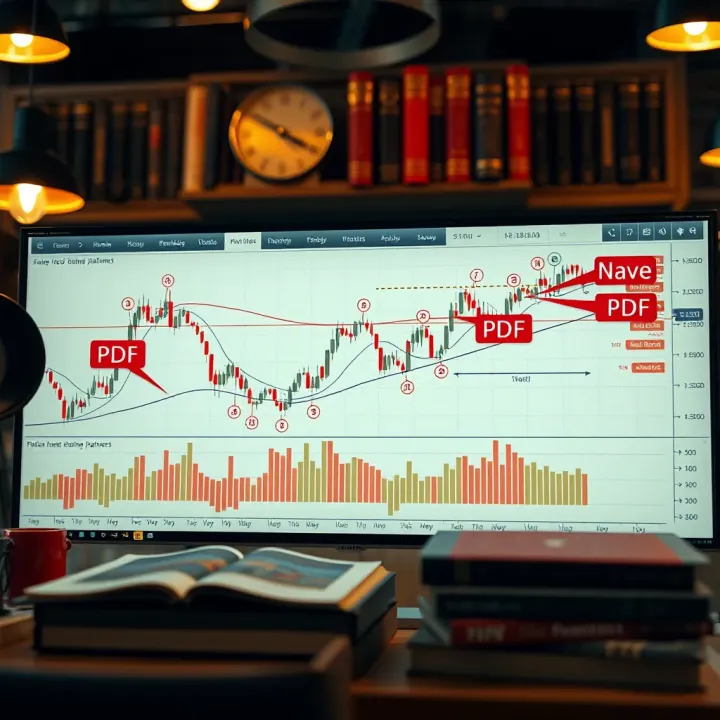
📈 Explore trading patterns through PDF books! Learn pattern types, find trusted resources & apply techniques to improve your market trades effectively.

📈 Explore trading basics, strategies & risk tips tailored for Pakistani investors. Master local & global markets with confidence and smart moves.

📈 Master trading chart patterns with our detailed guide for Pakistani traders! Get free PDFs to spot trends, improve strategies, and boost your market analysis skills.
Based on 13 reviews