
Understanding Order Blocks in Trading
📊 Learn how order blocks affect trading decisions, spot them on charts, and explore strategies and risks to trade smarter in Pakistan's markets.
Edited By
Oliver Shaw
When you hear "trading book," what pops into your mind? For many, it’s a specific portfolio where financial institutions buy and sell assets regularly, targeting profits from short-term market moves. But understanding a trading book goes beyond just trades—it’s about how these positions are structured, managed, and monitored in a world where market swings can be unforgiving.
In Pakistan’s financial markets, which are constantly evolving amid global influences and local economic shifts, the trading book plays a vital role. It helps traders, brokers, investors, and analysts grasp the risks and rewards tied to daily market activities. Knowing the nuts and bolts of the trading book can sharpen your decision-making and enhance risk awareness.
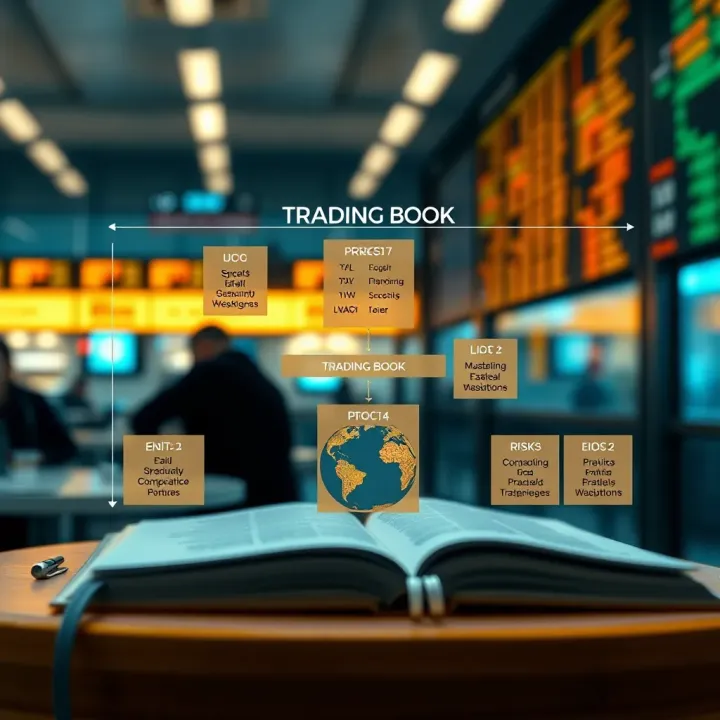
This article breaks down the concept into manageable chunks: what defines a trading book, how it differs from other portfolios, how institutions keep an eye on risks, how they value these positions, and what rules govern their operation. It’s designed to give you a clear, practical understanding that fits right into the realities of Pakistan’s market.
Whether you're managing a portfolio or just keen on financial workings, getting a grip on the trading book is like having a map in unfamiliar terrain—it guides you through complexity with clearer insight.
Let’s jump in and unpack the essentials of the trading book, so you’re well-equipped to navigate its challenges and benefits.
Understanding what a trading book is and its role within financial institutions is fundamental for anyone involved in trading, brokerage, investment, or analysis. This section breaks down the essence of the trading book, highlighting its importance in managing market risk and operational strategies. In Pakistan’s dynamic markets, grasping this concept can guide better decision-making and regulatory compliance.
A trading book is essentially a portfolio of financial instruments that a firm holds with the intention of short-term resale or to profit from short-term price movements. It is characterized by its focus on liquidity and market responsiveness. For example, a trader at a local Pakistani bank might keep stocks or forex positions in the trading book to capitalize on intraday or weekly market changes rather than long-term appreciation.
The purpose is to enable active management that aligns with market opportunities, providing flexibility to buy or sell swiftly based on emerging trends or price shifts. The trading book serves as a hotbed for risk-taking and speculative strategies, setting it apart from more conservative investment portfolios.
Trading books typically include a range of liquid assets such as equities, derivatives, fixed income securities, foreign exchange instruments, and commodities. Take, for instance, an equity trader in Karachi dealing primarily with shares of companies listed on the Pakistan Stock Exchange (PSX) or currency traders managing spot and forward American dollar contracts.
These assets are chosen for their rapid market turnover potential and suitability for short-term strategies. Illiquid or long-term assets generally don't find a place here, emphasizing the trading book’s role in fast-paced market environments.
Positions in the trading book are usually speculative or intended for active market making, meaning they are held to exploit price volatility or bridge buy-sell orders. Conversely, banking book positions tend to be more strategic — such as loans or held-to-maturity bonds — aiming for steady returns over time without frequent trading.
For example, a bank's loan portfolio, forming part of the banking book, is held to generate interest income steadily. Meanwhile, a trading book's holdings like government securities bought to sell within days to capture small price movements illustrate the difference in intent.
Holding periods are notably short in a trading book. Assets are typically held from a few seconds up to a few months. This contrasts strongly with the banking book, where assets might be held for years. Market traders, for instance, might shift their positions several times during a trading day based on market news or trends.
This short holding period demands continuous monitoring and fast decision-making, differentiating the operational style and risk profile between the two books.
In the trading book, profits and losses are recognized in real-time or daily through mark-to-market accounting. This means the value of positions is updated with current market prices, reflecting gains or losses promptly. For example, a forex trading desk in a Pakistani bank will update its P&L daily based on currency fluctuations.
On the other hand, the banking book typically recognizes income through interest accrual, and any loss recognition is often delayed and depends on the asset's credit quality or impairment criteria. This differing approach affects risk management, capital allocation, and financial reporting within the institution.
Understanding these distinctions is vital for traders and managers alike. It not only influences operational strategies but also dictates regulatory requirements unique to trading versus banking activities.
By clearly distinguishing the trading book from the banking book and appreciating its unique characteristics and assets, financial professionals can better navigate risk, compliance, and market dynamics specific to their role and market environment.
Understanding the structure and components of a trading book is essential for anyone involved in financial markets. The trading book is not just a random pile of assets; it has a specific configuration that affects how risks are managed, profits are realized, and regulatory requirements are met. This section sheds light on how different asset classes and position types come together to form a functional trading book and why this matters in real-world trading and risk management.
Equities make up a substantial portion of any trading book, especially in markets like Pakistan's Karachi Stock Exchange, where local shares are actively traded alongside foreign equities. They provide direct ownership in companies and can fluctuate widely in value. Derivatives, such as options and futures, add another layer of complexity. They’re contracts whose value depends on underlying assets like stocks, commodities, or indices, and can be used for hedging or speculative purposes.
Using derivatives, traders can protect against price swings or take leveraged positions without owning the underlying asset. For example, a trader might buy a call option on a major stock expecting a rise without committing the full amount to shares, reducing upfront capital needs but increasing risk exposure.
Fixed income instruments, like government bonds, corporate bonds, and treasury bills, provide more stability to the trading book due to their predictable interest payments. In Pakistan, government Pakistan Investment Bonds (PIBs) and Treasury Bills are common choices, providing relatively steady returns and lower risk compared to equities.
These instruments help diversify risk but also come with interest rate risk—when rates rise, bond prices typically fall. Traders in the fixed income space often manage this risk through duration strategies or interest rate swaps.
Foreign exchange (forex) and commodities represent another vital chunk. Traders actively buy and sell currencies such as the US Dollar or Pakistani Rupee based on expected economic shifts or central bank decisions. Commodities like oil, gold, and agricultural products also find their way into trading books.
These assets add liquidity and opportunities for diversification but demand strong market knowledge. For instance, a sudden change in oil prices can hugely impact economies and trading strategies. Commodity futures enable traders to lock prices ahead, mitigating the risk of price swings.
Speculative positions are all about predicting price movements to make profits. These can be short-term trades based on technical analysis or longer bets on fundamental changes. While they can deliver high rewards, they also carry high risks.
In practice, a trader might take a speculative position by going long on a tech startup’s stock that could benefit from a new regulation change or shorting a currency expected to weaken due to political instability.
Market making involves continuously buying and selling securities to provide liquidity to the market. Market makers profit from the bid-ask spread, essentially the difference between the price a buyer pays and a seller receives.
For example, a market maker in the Karachi Stock Exchange will post buy and sell prices for shares, ensuring there’s always someone to trade with. This role is crucial because it keeps markets functioning smoothly, particularly in less liquid assets where trades could otherwise stall.
Arbitrage exploits price differences for the same or similar assets in different markets or forms. Traders can lock in risk-free profits if executed correctly, such as buying a stock on one exchange where it’s cheaper and simultaneously selling it where it commands a higher price.
A real-life example would be identifying a pricing gap between the Pakistan Stock Exchange and a foreign exchange listing, or between the cash market and futures prices. Though opportunities can be fleeting, modern technology and real-time data make arbitrage a common strategy for sophisticated trading desks.
The key takeaway here is that the structure and components of a trading book aren’t just academic concepts—they translate directly into how risks and opportunities are balanced and how different strategies align with market realities.
By understanding the mix of assets—from equities to forex—and the diverse position types, traders and investors in Pakistan can better navigate the local and global financial conditions. This prepares them to handle volatility, meet compliance, and optimize strategies for their trading books.
Risk management stands as the backbone of any successful trading book management. Without it, even the most promising trading strategies can lead to substantial losses. Especially in volatile markets like those in Pakistan where economic and political shifts can rapidly change the landscape, understanding and managing risk isn't just smart—it's essential.
Traders and portfolio managers must keep a close eye on various risks to protect the institution’s capital and ensure steady returns. It’s not just about avoiding losses but managing exposures wisely to capitalize on market opportunities without going off the rails.
At its core, market risk is the chance that the value of assets will drop due to changes in market factors such as stock prices, interest rates, and currency exchange rates. Measuring this risk requires tools like Value at Risk (VaR), which estimates the potential loss over a given period with a certain confidence level. For example, a VaR of 1 million PKR at 99% confidence over a day means there’s just a 1% chance losses will exceed that amount in one day.
Stress testing and scenario analysis also play a key role. By simulating extreme market conditions, traders can see how their books might react during a market crash or sudden currency devaluation. This helps spot vulnerabilities that standard risk measures might miss.
Price swings can wreak havoc if not carefully managed. Take the Pakistani stock market’s reaction to sudden political rumors—equities might plunge or spike within hours. If a trader holds large speculative positions without adequate risk control, a sharp price move can quickly wipe out profits or even cause heavy losses.
Frequent monitoring helps catch early warning signs. By setting stop-loss orders and diversifying positions, traders can soften the blow from sudden drops. Understanding the typical volatility of each asset type guides position sizing, so you’re not biting off more risk than you can chew.
Credit risk arises when the party on the other side of a trade might fail to honor their obligations. In a trading book, this risk is especially relevant for derivatives and fixed income instruments. Assessing credit exposure involves looking at the counterparty’s credit rating, financial health, and past repayment history.
For instance, during the 2018 economic slowdown in Pakistan, certain corporate counterparties faced trouble meeting their obligations. Traders who ignored these signals ended up stuck with bad debt, impacting their overall book health.
To nip default risk in the bud, traders use collateral agreements and credit limits. Requiring counterparty collateral ensures that even if things go sour, some assets are secured. Credit limits cap the amount one counterparty can borrow or trade, preventing overexposure.
Netting agreements also help by offsetting positive and negative exposures with the same counterparty—consolidating risk to a manageable figure rather than gross amounts. Plus, working with counterparties who have a strong track record in the local and global markets reduces surprises.
Liquidity risk pops up when it’s tough to sell assets without hammering their price. Illiquid assets can stick like glue in the portfolio during market stress. Pakistan’s relatively smaller market size sometimes means certain bonds or derivatives may trade thinly, making exit at a fair price tough.
For example, a trader holding a large chunk of a rarely traded corporate bond might find few buyers when trying to exit, forcing a steep price discount or holding the position longer than planned.
Keeping liquidity healthy means blending assets that trade regularly with less liquid ones, ensuring a portion of the book can be converted to cash quickly. Setting daily liquidity targets and stress testing for liquidity crunch scenarios helps prepare for sudden cash needs.
Maintaining relationships with multiple brokers and market makers provides better access to buyers. In turbulent markets, having pre-agreed lines of credit or repo agreements can also smooth out liquidity shortfalls.
Managing risk in the trading book is a delicate balancing act. Knowing which risks you face, measuring them carefully, and putting controls in place not only protects capital but gives a lender or investor confidence that the book isn’t a ticking time bomb.
By focusing on market risk, credit exposure, and liquidity challenges, traders can navigate Pakistan’s markets with a steadier hand and more reliable outcomes.
Valuation and accounting are the backbone of managing any trading book effectively. They provide clear snapshots of what positions are worth at any given moment, allowing traders and managers to make informed decisions. Without accurate valuation, you risk misjudging exposure and income, which can lead to surprises during volatile market conditions.
Accounting practices, meanwhile, ensure transparency and regulatory compliance. They guide how gains, losses, and holdings get reported both internally and to regulators. For institutions operating in Pakistan's dynamic financial markets, solid valuation and accounting aren't just bookkeeping chores — they are essential for maintaining trust and stability.
Mark-to-market (MTM) valuation means pricing trading assets based on their current market value rather than their original purchase price or some book value. It’s like checking the price tag on a car you're about to sell right this moment, not what it cost you years ago. This method offers a real-time picture of profit and loss, which is particularly vital when markets swing.
For example, if a trader bought shares at 100 PKR each and the current market price is 110 PKR, the MTM approach shows a 10 PKR per share gain immediately, helping the bank or fund assess its financial standing accurately. This immediate reflection assists in risk assessment and capital allocation.
However, the approach demands reliable market data. For liquid assets like Pakistani government bonds or actively traded stocks on the Pakistan Stock Exchange, MTM is straightforward. But not all assets trade daily.
The real headache appears with illiquid assets—think exotic derivatives or corporate bonds from smaller issuers that don’t see much action. Here, market prices may be absent or unreliable, making MTM tricky.
In these cases, institutions often have to estimate values using models, sometimes based on similar instruments or historical trends, which introduces estimation errors and potential disputes. For instance, during financial stress, these estimates may become wildly off, concealing risks until it’s too late.
One practical approach seen in Pakistani trading desks is to apply conservative valuation policies on illiquid items, often marking down prices to mitigate shock exposure. This cautious stance balances fairness with prudence.
Accounting for gains and losses in trading books follows strict guidelines to prevent manipulation. In Pakistan, as in many places, IFRS (International Financial Reporting Standards) set much of the ground rules. Under IFRS 9, all changes in the fair value of trading assets must be recognized in profit or loss immediately.
This means if the price jumps or drops, those changes hit the financial statements that day. Unlike the banking book, where some gains can be deferred, trading books demand immediate recognition to reflect the true economic reality.
For example, a sudden spike in commodity prices held in the trading book will instantly boost reported profits, and any fall will show as a loss, giving stakeholders a clear sense of volatility and performance.
Transparent and timely reporting is critical. Regulators in Pakistan, like the Securities and Exchange Commission of Pakistan (SECP), expect regular disclosures about trading positions, their valuation methods, and risk exposures.
Institutions usually submit periodic reports detailing daily MTM values, risk limits breach, and profit/loss summaries. Internally, these reports support real-time risk management; externally, they uphold market discipline and investor confidence.
Accurate valuation and accounting practices aren’t just about numbers. They build the trust that financial institutions need to operate confidently, especially amid Pakistan’s often-volatile markets.
In summary, mastering valuation and accounting for the trading book helps traders and institutions navigate daily operations with clarity. It ensures decisions rest on current realities rather than outdated figures, which is crucial in a landscape where prices can swing drastically within hours or even minutes.
Understanding the regulatory framework surrounding trading books is essential for anyone involved in financial markets, especially traders, brokers, and banking professionals. Regulatory rules are designed to ensure that financial institutions manage risks prudently, maintain adequate capital buffers, and operate transparently. In Pakistan, like in many other markets, these regulations impact how trading books are structured, valued, and monitored.
Compliance with regulation helps avoid costly penalties and reputational damage, but more importantly, it fosters stability within the financial system. Regulatory oversight also protects investors by promoting fair dealing and reducing the risk of systemic shocks triggered by aggressive or unchecked trading behavior. As such, the regulatory environment can't be seen as a burden; it's part of the necessary checks that keep market dynamics healthy and predictable.
Regulations cover various aspects, but capital requirements and reporting obligations are at the heart of trading book governance. Let’s dive into these two key areas.
The Basel Accords form the backbone of international banking regulations, setting out standards for capital adequacy, stress testing, and market risk management. Pakistan's State Bank aligns with these accords to ensure that local banks hold enough capital relative to the risks they're taking in their trading books.
The key idea is straightforward — banks should keep a cushion of capital to absorb losses in bad times without collapsing. For trading books, this means holding capital against market volatility and unexpected outcomes on their positions. Basel III, the latest iteration, introduces stricter capital requirements and tighter risk management standards than earlier versions.
This is practically relevant because it influences how much a financial institution can risk in its trading book. If a bank wants to increase its speculative trading, it must be ready with sufficient capital, making risk-taking more disciplined.
Trading books are treated differently from banking books under Basel rules because of their short-term focus and higher volatility. Basel requires banks to calculate market risk capital charges using either standardized approaches or internal models, like Value at Risk (VaR).
One concrete requirement is that banks must update their risk assessments daily and ensure the capital held reflects the current risk profile. For example, if a trading book suddenly takes large positions in emerging market equities, the capital requirements can skyrocket due to the extra risk.
Understanding these rules helps financial professionals gauge the cost of risk-taking and balance potential profits against regulatory capital demands. Ignoring these specific rules can lead to undercapitalization, inviting regulatory scrutiny or worse, sudden losses that threaten a bank's solvency.
Transparency via disclosure is critical. Regulators require banks to publish details about their trading book exposures, risk models, and capital adequacy regularly. In Pakistan, disclosures help stakeholders and market participants understand a bank’s risk appetite and trading activities.
For instance, a broker reviewing a bank's financial reports can assess if the trading book holds excessive positions in volatile assets like foreign exchange derivatives. These disclosures also ensure that financial institutions are accountable for their risk-taking and provide a snapshot of their health.
Proper disclosure practices reduce rumors and panic during uncertain times, contributing to market confidence and stability.
Supervisory reviews are hands-on inspections by regulators who dig into banks’ trading book management and controls. They assess whether risk measurement systems are accurate, capital is adequate, and compliance with internal limits is maintained.
A practical example is the State Bank conducting onsite checks focused on how trading desks price complex derivatives or how they hedge currency exposures. These reviews often catch gaps that automated reports might miss, such as internal policy breaches or hidden concentrations of risk.
Effective supervisory reviews compel banks to tighten internal governance and update risk practices continually. From a trader’s perspective, this means strategies and positions are frequently scrutinized, encouraging vigilance and more robust risk controls.
Regulatory frameworks around trading books are not just paperwork exercises — they shape decision-making at every level, ensuring financial institutions can weather market swings without threatening broader economic stability.
In summary, Pakistan’s regulatory environment for trading books revolves around sound capital requirements based on the Basel Accords, coupled with rigorous reporting and supervisory oversight. Traders and risk managers must pay close attention to these legal obligations to maintain compliance and stay competitive. Embracing these rules helps mitigate risk effectively, supporting healthier and more resilient trading operations.
Market conditions have a direct and often immediate impact on the performance and management of a trading book. Understanding these effects is vital for traders, brokers, and analysts, especially in volatile environments like Pakistan's financial markets where sudden shifts can come from geopolitical events, policy changes, or currency fluctuations. This section highlights key aspects of how changing market dynamics influence trading decisions, risk management, and asset valuations within a trading book.
Risk adjustments are a necessary part of managing a trading book during periods of volatility. When markets get shaky, the usual assumptions about price stability no longer hold. Traders must recalibrate models, often increasing risk limits to accommodate higher price swings or, conversely, tightening controls to avoid outsized losses. For example, a trader dealing with Pakistani Rupee derivatives might widen stop-loss triggers during a volatile session caused by sudden changes in monetary policy.
Regular risk assessment tools such as Value at Risk (VaR) or stress testing become more dynamic, reflecting increased uncertainty. This helps decision-makers gauge potential losses more realistically. Ignoring these shifts could leave the trading book exposed to market moves it was not prepared for.
Strategy shifts during turbulence also come into play. Many traders tend to reduce speculative positions and lean towards safer, more liquid assets when volatility spikes. In Pakistan’s equity market, this might mean moving away from mid-cap stocks, which can be more sensitive to market swings, and focusing on blue-chip companies or government securities.
Market-making desks may widen their bid-ask spreads to protect themselves, changing the liquidity dynamics of the trading book. Some firms might pause certain arbitrage strategies that rely on stable spreads, opting instead for hedging or sideways market plays until conditions stabilize. This flexibility is essential for preserving capital and maintaining the integrity of the trading portfolio.
The impact on asset values caused by shifting interest rates or currency rates is often significant. Rising interest rates can depress bond prices and increase borrowing costs, changing the valuation landscape for fixed-income instruments within a trading book. For instance, an unexpected hike by the State Bank of Pakistan could lead to a swift drop in Pakistan Government Bond prices.
Similarly, currency movements alter the value of foreign-denominated assets or liabilities. A devaluation of the Pakistani Rupee might inflate the local currency value of foreign investments but also raise the cost of servicing foreign currency debt. Traders must remain vigilant about these shifts since they can affect not only profit and loss but also margin requirements and liquidity.
Hedging approaches are indispensable in managing these risks. Common methods include using interest rate swaps or futures to guard against rate changes, and currency forwards or options to offset forex exposure. A trader expecting Rupee depreciation might take a short position in currency futures to counterbalance potential losses on foreign assets.
Effective hedging involves continuous monitoring and adjustment as market conditions evolve. A one-size-fits-all approach rarely works; traders often combine several instruments to balance cost, complexity, and protection. For example, layering options strategies with futures contracts can provide asymmetric protection during uncertain times.
Market conditions act like shifting sands beneath the trading book. The ability to quickly adapt, reassess risk, and implement dynamic strategies is what separates an average trading desk from a resilient, profitable one.
Understanding these elements ensures a trading book remains robust and responsive, navigating the ups and downs of market forces with informed precision.
Managing a trading book demands more than just spotting good trades—it requires solid best practices that keep risks in check while aiming for consistent performance. Especially in volatile markets like Pakistan’s, effective management can be the difference between a profitable quarter and a nasty surprise. This section sheds light on practical strategies traders and risk managers can deploy to maintain control over their trading activities, balancing profit goals with risk tolerance.
A clear risk appetite acts like a compass for trading decisions, outlining how much risk an institution or trader is willing to take. This isn't just a vague feeling but a quantified boundary guiding every move. For instance, an investment bank may decide it won’t risk losing more than 2% of its trading capital on any single position. Defining this upfront helps prevent rash decisions driven by emotions, especially during turbulent periods. Practically, this means setting maximum loss thresholds and acceptable volatility ranges before entering trades.
Once risk appetite is set, position limits translate that boundary into actionable rules. They cap the size of any single position to prevent outsized exposure that could cripple the portfolio if the market moves against it. For example, a local brokerage firm trading commodities like wheat futures may set a position limit of 5,000 contracts to avoid concentration risk. Position limits often consider liquidity as well; less liquid assets typically require tighter limits. This approach keeps trading books diversified and reduces the chance of big hits that can damage overall performance.
Markets can shift within seconds, so real-time risk analytics are essential. These tools crunch live data to highlight exposures, alerting traders instantly if their positions are drifting outside risk parameters. For example, a forex desk tracking rupee-dollar swaps might use software to gauge exposure against risk limits minute by minute. This live monitoring allows swift adjustments, preventing small problems from snowballing into major losses.
Taking stock regularly of how the trading book performs helps pinpoint where strategies are working or faltering. This isn’t just about profits but also the sources of risk and cost efficiency. For instance, reviewing daily profit and loss against market events in Pakistan’s equity markets can help analysts tweak strategy weightings. Transparent reporting keeps everyone—from traders to senior managers—informed and accountable, fostering timely decisions to optimize returns.
Consistent application of these best practices creates a framework that not only safeguards the portfolio but also empowers traders to act with confidence and precision in dynamic market conditions.
By setting clear boundaries on risk and monitoring trades continuously, financial institutions can manage their trading books with a balanced approach—protecting capital while pursuing growth opportunities.
📊 Learn how order blocks affect trading decisions, spot them on charts, and explore strategies and risks to trade smarter in Pakistan's markets.
📈 Learn how to read trading charts, understand price trends, and use key indicators effectively to boost your trading skills in Pakistan's markets. 🇵🇰
Forex trading tips for Pakistani traders 🇵🇰: Learn market basics, smart strategies, and top platforms while avoiding common pitfalls. Trade confidently! 💹
Master common trading patterns 📈 with our practical guide and handy PDF resources 📚 to sharpen your market analysis and boost decision-making skills.
Based on 5 reviews